by Dean Ellul | Oct 6, 2026 | Emergency Plumbing
Emergency Plumbing Repairs
Cranbourne East
Fast & Reliable Emergency Plumbers Cranbourne East
Repeatedly forcing, flushing, tightening or resetting a faulty fitting can make diagnosis harder and may cause damage. For general plumbing maintenance, use only safe user checks and then arrange professional help if the issue persists.
Make a note of where and when the issue happens. Avoid dismantling fixtures or using tools on pressurised connections.
If you notice a new leak, smell, sound or change in performance, record it before it disappears. Keep the affected area accessible and share any useful photos or notes when arranging a visit. Den Services attends service and repair work across Cranbourne East.
,
Call Us Today 1300 580 415
by Dean Ellul | Oct 6, 2026 | Emergency Blocked Drain Repairs
Blocked drains: Early warning signs
Small changes often appear before a complete failure. Watch for water draining slowly, gurgling sounds or an unpleasant smell near a floor waste. Note when the issue happens and whether it affects one fixture or several; that detail helps narrow down the cause.
The key is to describe what you can observe and leave diagnosis to the technician. Den Services provides plumbing, heating and cooling services and repairs across South-East Melbourne. If you are seeing this issue at home, describe the symptoms when you book so the right checks can be planned.
If you need professional blocked drain repairs in Berwick 3806, contact Den Services today.
Call Us Today 1300 580 415
by Dean Ellul | Oct 2, 2026 | Emergency Plumbing
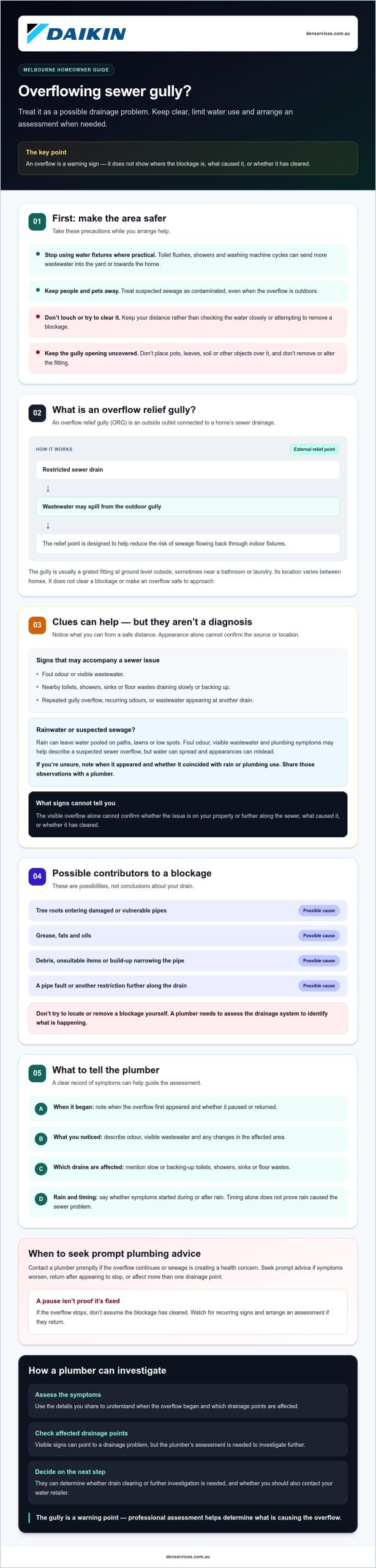
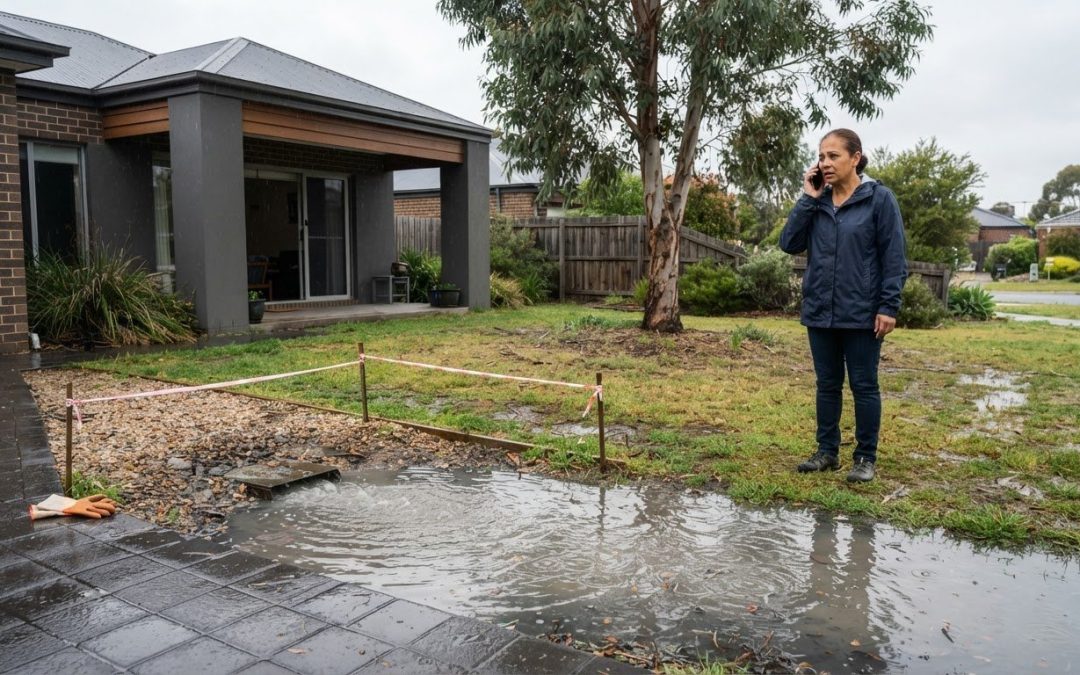
An overflowing sewer gully isn’t a problem to wait out. Every toilet flush, shower or washing machine cycle can send more wastewater into your yard or towards your home. Stop using water fixtures where practical, and keep people and pets away from the affected area.
It’s understandable to worry about sewage exposure and wonder whether the blockage is on your property or in the main sewer. Don’t try to clear the gully or touch the wastewater. Tree roots, grease, foreign objects or another restriction in the pipes can contribute to a blockage, but the visible overflow alone can’t show where the problem is.
This guide explains what an overflowing sewer gully means, what to do safely and when Melbourne homeowners should call a plumber. You’ll learn what to avoid while you wait, which details to share when reporting the problem, and how a plumber can investigate the drainage. If the overflow continues or sewage is creating a health concern, contact a plumber promptly. They can assess the symptoms and help determine whether you should also contact your water retailer.
Key Takeaways
- An overflow relief gully (ORG) is an external outlet for wastewater. An overflowing sewer gully can signal a restricted drain that needs investigation.
- Visible signs can point to a drainage problem, but they can’t confirm where the blockage or fault is.
- If the overflow stops, don’t assume the blockage has cleared. Watch for recurring signs and arrange an assessment if they return.
- A plumber can check affected drainage points and decide whether drain clearing or further investigation is needed.
- Share when the overflow began, what you’ve noticed and whether other drains are affected to help guide the assessment.
Overflowing sewer gully in Melbourne: what is happening?
An overflow relief gully, or ORG, is an outside outlet connected to a home’s sewer drainage. If wastewater spills from it, a sewer drain may be blocked or restricted. The gully is designed to provide an escape point outside, helping reduce the risk of sewage flowing back through indoor fixtures. An overflow is a warning sign, not proof of where the blockage is or whether it has cleared.
Where is the overflow relief gully and what does it do?
Look for a grated fitting at ground level outside. It may be near a bathroom or laundry, but its location varies between homes. If wastewater backs up in the sewer drain, the gully can act as a relief point and direct it outdoors rather than into the house.
The ORG doesn’t clear a blockage or make an overflow safe to approach. Keep its opening uncovered and unobstructed. Don’t place pots, leaves, soil or other objects over it, and don’t remove or alter the fitting. Covering it can interfere with its relief role.
Is it sewer overflow or stormwater?
Rain can leave water pooled on paths, lawns or other low spots. Suspected sewer overflow may have a foul odour or visible wastewater. Nearby toilets, showers or floor wastes may also drain slowly or back up. These clues can help you describe the problem, but they can’t confirm the source. Water can spread from one area to another, and appearances can be misleading.
Treat suspected sewage as contaminated.
Keep your distance rather than touching the water or checking it closely. If you’re unsure whether the pooling is rainwater or wastewater, note when it appeared and whether it coincided with rain or plumbing use. Share those observations with a plumber. Stormwater and sewer lines serve different purposes, though their arrangement can vary. This overview of drainage systems explains the distinction.
An overflowing sewer gully in Melbourne should be treated as a possible drainage problem, even if the water is outside and indoor fixtures still seem to work. The visible overflow is a symptom. A plumber can assess the affected drainage points and investigate what’s causing it.
Why does a sewer gully overflow, and what can the signs tell you?
An overflowing sewer gully can have several causes. Wastewater may be struggling to pass a blockage or restriction in a pipe, or there may be a fault further along the drain. The visible overflow is a clue, not a diagnosis. You can’t tell from the gully alone where the problem sits or what caused it.
Possible contributors include debris, unsuitable items entering the drain and build-up that narrows the pipe. Tree roots can enter damaged or vulnerable pipes, and pipes can be damaged for other reasons. These are possibilities, not conclusions. A plumber needs to assess the drainage system to identify the cause.
Heavy rain may happen around the same time as an overflow, but timing alone doesn’t prove rain caused the sewer problem. Note whether symptoms started during or after rain and tell the plumber. That detail can help with the assessment, but it doesn’t confirm whether the issue is in a private drain or further along the sewer.
Common causes of an overflowing sewer gully
Fats, oils, grease and tree roots are among the issues described in the US Environmental Protection Agency’s overview of the causes of sewer overflows. In a home, debris, unsuitable items and build-up may also contribute to a restriction. Don’t try to locate or remove a blockage yourself. A plumber can assess what’s happening and recommend the next step.
What other warning signs should you check?
From a safe distance, consider whether toilets, showers, sinks or floor wastes are also slow or backing up. Several affected fixtures may point to a shared drain problem, though they don’t identify its location. Note recurring foul odours, repeated gully overflow or wastewater appearing at another drain.
If symptoms worsen, return after appearing to stop, or affect more than one drainage point, seek prompt advice from a plumber. Share what you’ve observed, when it began and which fixtures are affected. For help with a drainage concern, review Denservices’ plumbing and blocked-drain services and confirm coverage for your Melbourne address.
Can you wait or fix an overflowing sewer gully yourself?
An outdoor overflow still needs attention. Sewage can expose people and pets to contamination, and wastewater may spread towards the house or other parts of the yard. Don’t assume the problem is harmless because it’s outside. If the flow pauses, that also doesn’t prove the blockage has cleared. It may return when more wastewater enters the drain.
When does an overflow need urgent attention?
Get prompt plumbing advice if sewage is actively spilling, wastewater is backing up indoors or the overflow keeps happening. Keep children and pets well away from the affected area. If wastewater enters a living area, avoid contact and seek professional guidance on what to do next. For local health advice on protecting yourself and your family, follow the Better Health Channel’s guidance on sewage overflows at home.
While you arrange help, stick to safe observation. Note whether the overflow is continuing and which fixtures are affected, but don’t approach or touch wastewater to check it. Keep others away until the situation has been assessed.
Why should you avoid DIY drain clearing?
Don’t reach into the gully or handle wastewater, contaminated objects or chemicals you can’t identify. Avoid caustic drain products and improvised tools. They can create additional hazards and may complicate a plumber’s assessment. Never lift, dismantle or modify the gully or other drainage fittings. Leave inspection and clearing to a plumber who can assess the problem safely.
It can be tempting to wait if the water drains away on its own. But a temporary stop doesn’t show whether the restriction has shifted, remains in place or is likely to cause another backup. If symptoms return or worsen, seek professional advice rather than trying another DIY fix.
For general information about blocked drain clearing with hydro jetting in Melbourne, use a guide that is specific to Victorian regulations and plumbing standards. For an active overflowing sewer gully at your Melbourne home, contact Denservices and confirm they cover your address.
What should you do if a sewer gully overflows in Melbourne?
Act in order: keep clear, reduce water use, note what you can see safely, then arrange plumbing help. These steps can limit further wastewater discharge and give the plumber useful details.
- Keep people and pets away. Don’t touch wastewater or contaminated surfaces. Avoid walking through the affected area.
- Reduce water entering household drains. Limit toilet, shower, laundry and sink use while a sewer blockage is suspected. Don’t compromise essential hygiene or safety.
- Observe from a safe distance. Note when the overflow began, whether it’s still active and if it returns. Check whether indoor fixtures or other drains are affected without approaching the wastewater.
- Arrange help. Contact a plumber if the overflow continues, recurs or is accompanied by indoor backups. Don’t hose wastewater into a stormwater drain or onto neighbouring property.
Safe steps to take before the plumber arrives
Keep access to the area clear for the person attending, but don’t move or handle contaminated objects. If wastewater has entered a living area, avoid contact and seek professional guidance. Don’t try to wash the spill away. Keep a record of what you observe instead.
What information should you give the plumber?
Be ready to share your Melbourne suburb and property address, where the overflow is, when it started and whether it’s still active. Report any slow or backing-up toilets, showers, sinks or floor wastes. Mention unusual odours, repeat incidents and whether the issue began during or after heavy rain. These details help the plumber assess the symptoms and decide what to check.
A plumber may need to investigate the pipe to locate a restriction or fault. Depending on the assessment, this could include a camera inspection and a discussion of the drain inspection camera findings. No single method is right for every overflow, so leave the diagnosis to the professional.
If you suspect the public sewer may be involved, check which water retailer is responsible for your property using your address, then contact them to report the concern. A plumber can also help assess whether the issue appears to be within the property’s drainage or further along the sewer.
For plumbing help with a sewer gully overflow, contact Denservices about plumbing support and confirm service coverage for your address.
What will a plumber do about an overflowing sewer gully?
A plumber will assess the overflow before deciding what to do. They’ll ask what you’ve noticed, check the affected drainage points and consider whether other fixtures are slow or backing up. This helps them work out what needs investigation. The visible overflow alone can’t confirm the blockage’s location or cause.
How a plumber investigates the blockage
Expect questions about when the problem started, whether it has happened before and which toilets, showers, sinks or floor wastes are affected. The plumber may carry out visual checks of accessible drainage points. If more information is needed, a camera inspection may help locate a problem inside a pipe. It’s an option, not an automatic step for every job.
After assessing the symptoms, the plumber can explain whether drain clearing or further investigation is appropriate. The method depends on what they find. A blocked drain clearing guide may offer general information, but professional advice tailored to your specific Melbourne property is always recommended for an overflowing sewer gully.
When to contact Denservices for plumbing help
Request plumbing help if wastewater is actively overflowing, sewage has backed up indoors or the symptoms keep returning. Tell the plumber whether the overflow is still happening and what you’ve already observed. Don’t try to clear the blockage or dismantle fittings while you wait.
Denservices provides plumbing services, blocked-drain services and emergency call-outs. Emergency call-out availability and coverage can depend on your location and the issue. Confirm that Denservices can assist at your Melbourne address, and ask whether an emergency call-out is available for your situation.
Before arranging a visit, ask what the assessment may involve and what information the plumber needs from you. A clear account of the symptoms can help them decide what to check first, but the cause and next step can only be determined after assessment. There’s no need to guess or attempt a repair yourself.
If you need help with an overflowing sewer gully, contact Denservices to discuss the symptoms and confirm coverage for your address.
Take the next step to protect your home
An overflowing sewer gully is a warning sign, even if the spill is outside or stops on its own. Keep people and pets clear, limit water use and don’t attempt to clear or dismantle the drain yourself. A plumber can assess the affected drainage points and decide whether clearing or further investigation is needed.
Note when the overflow began, whether it’s still active and which fixtures are affected. These details help the plumber understand what’s happening. If you suspect the public sewer may be involved, check the responsible water retailer for your address as well.
Denservices lists plumbing and blocked-drain services and advertises 24/7 emergency call-outs through its national phone line. Call 1300 580 415 or contact the business by email, and confirm availability for your Melbourne address and this issue. Contact Denservices for plumbing help and explain what you’ve observed.
With clear information and professional assessment, you can take the next step with confidence.
Frequently Asked Questions
What should I do first when my sewer gully is overflowing?
First, keep people and pets away from the affected area. Don’t touch the wastewater or try to clear the gully. Limit toilet flushing, showers, sinks and laundry use while a blockage is suspected. Contact a plumber if the overflow is active, keeps returning or is linked to indoor backups. Note when it started and which fixtures are affected so you can give the plumber clear details.
Is an overflowing sewer gully an emergency?
An active sewage overflow, wastewater entering the home or several fixtures backing up needs prompt attention. Keep clear and arrange professional plumbing advice. If the overflow stops, don’t assume the blockage has cleared. Watch for further symptoms and contact a plumber if they return. Don’t enter or handle a contaminated area to investigate. If wastewater has reached a living space, avoid contact and seek professional guidance.
Can I use the toilet when the sewer gully is overflowing?
Avoid flushing the toilet while a sewer blockage is suspected. Limit showers, sinks and laundry appliances too, where practical, because they also send wastewater into the drainage system and may worsen a backup. If you need to use essential facilities, ask a plumber what’s appropriate for your situation. Don’t treat a pause in the overflow as proof that normal water use is safe.
Why is my sewer gully overflowing when it rains?
Rain may coincide with an overflow, but timing alone can’t confirm the cause. A blockage or restriction in the sewer drain may still be involved. Note whether indoor fixtures are slow, whether the water has a foul odour and whether the problem returns. Don’t assume it’s only stormwater. If symptoms persist or recur, arrange a plumber’s assessment to help identify what’s happening.
Can I pour drain cleaner into an overflowing sewer gully?
No. Don’t pour chemical drain cleaner into an overflowing gully. You could expose yourself or others to hazardous substances, and the product may not address the cause of the overflow. Don’t reach into the opening or use improvised tools either. Keep clear, reduce water entering the drains where practical, and contact a plumber for an assessment and advice on the next step.
Who is responsible for a sewer gully in Melbourne?
Responsibility depends on where the problem is and which part of the drainage system is affected. The gully alone can’t show whether the issue is within the property’s pipes or the public sewer. Ask a plumber to assess the blockage, and check the responsible water retailer using your Melbourne property address if a public sewer problem may be involved. Don’t assume who’s responsible before the issue is investigated.
Will an overflowing sewer gully clear by itself?
The visible overflow may stop temporarily, but that doesn’t prove the underlying restriction has cleared. If other drains remain slow, wastewater appears again or the problem recurs, arrange professional advice. Don’t test the drain by running large amounts of water. A plumber can assess the symptoms and decide whether drain clearing or further investigation is needed. Keep monitoring from a safe distance until you’ve received advice.
by Dean Ellul | Oct 2, 2026 | Emergency Plumbing
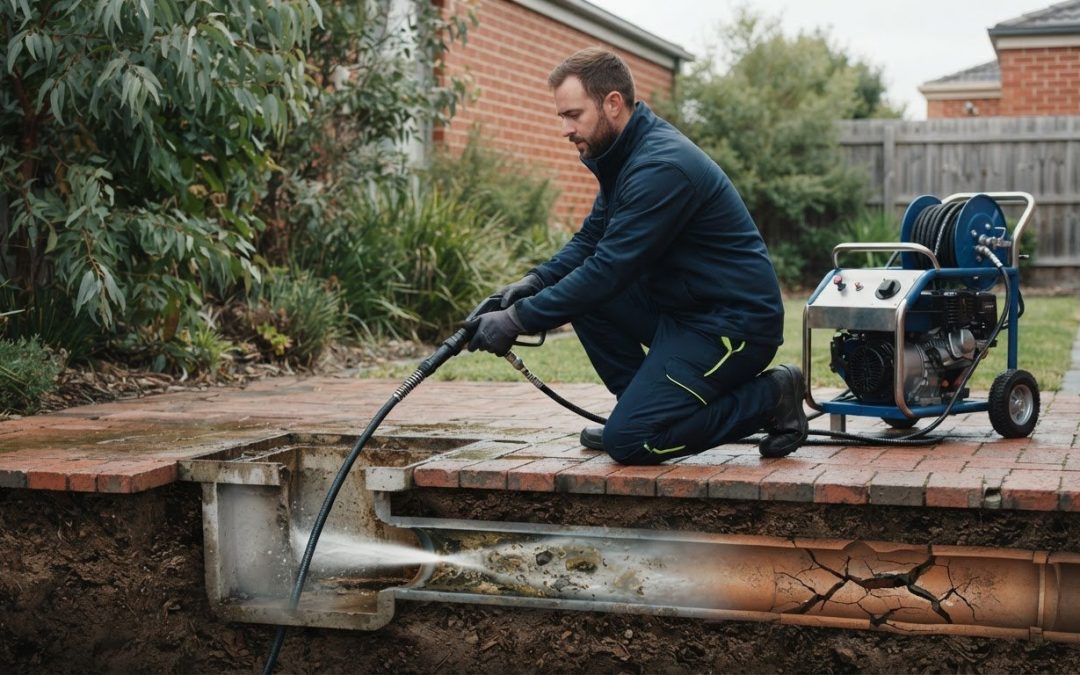
The most powerful drain-clearing method isn’t always the right first step. If you’re weighing up hydro jetting for a blocked drain, the key question is whether the blockage and your pipes suit high-pressure water.
Recurring clogs in a sink, shower or toilet can disrupt normal use, and it’s reasonable to worry about pressure damaging older or weakened pipes. Hydro jetting can clear stubborn buildup, but it won’t repair a cracked, collapsed or badly damaged drain. A plumber may need to inspect the line before choosing how to clear it.
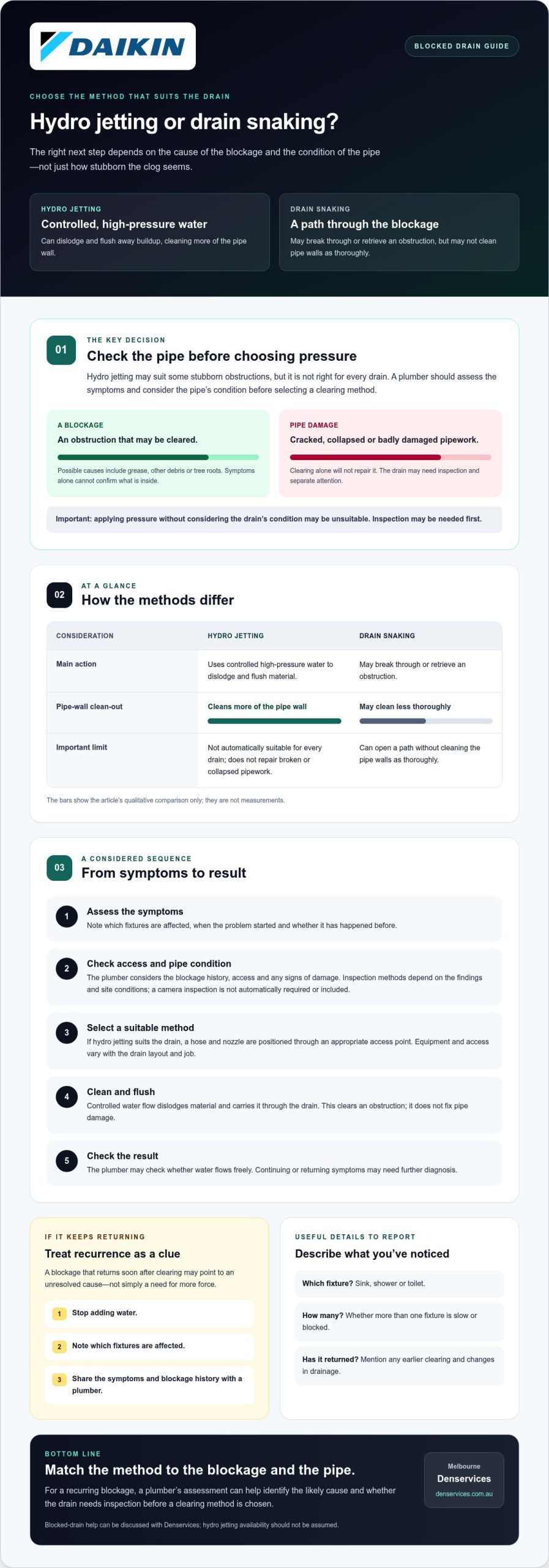
This guide explains how hydro jetting works, when it may help and what it can’t fix. You’ll also compare it with drain snaking, which can open a path through a blockage without cleaning the pipe walls as thoroughly. The right option depends on the cause of the clog and the condition of the drain, not just how stubborn it seems.
If a blockage keeps returning, arrange a plumber’s assessment before deciding on a clearing method. Melbourne readers can contact Denservices about blocked-drain help, without assuming hydro jetting is available.
Key Takeaways
- Hydro jetting uses controlled, high-pressure water, but a plumber should match the clearing method to the blockage and pipe condition.
- Before choosing hydro jetting for a hydro jetting blocked drain, find out whether the drain needs inspection to check for damage.
- Snaking may break through or retrieve an obstruction, while hydro jetting cleans more of the pipe wall. Each method has limits.
- If a blockage returns, stop adding water, note which fixtures are affected and share those details with a plumber.
- Melbourne readers can contact Denservices about blocked-drain help and describe the symptoms to discuss the next step.
Hydro jetting for a blocked drain: what it does and when it is considered
Hydro jetting cleans the inside of a drain by sending controlled, high-pressure water through it to loosen and flush away debris. If you’re searching for a hydro jetting blocked drain solution, the method may suit some stubborn obstructions, but it isn’t right for every pipe. Wiktionary records the term hydrojetting; in plumbing, the practical point is how the water is used to clear buildup from within a drain.
A plumber should choose the clearing method after assessing the symptoms and considering the pipe’s condition. A blockage is an obstruction that may be cleared. A cracked, collapsed or otherwise damaged pipe is a separate problem that clearing alone won’t repair. Applying pressure without first considering the drain’s condition could be unsuitable, so inspection may be needed before a method is selected.
Pay attention if the same drain blocks again soon after it has been cleared. That can point to an unresolved cause, rather than a need for more force. The obstruction might be grease, other debris or tree roots, but symptoms alone can’t confirm what’s inside. Its location and the pipe’s condition help determine what to do next.
What happens during hydro jetting?
A plumber feeds a hose and nozzle into the drain through a suitable access point. The nozzle directs water to dislodge material and flush it through the line. The access point and equipment depend on the drain layout and the job, so the process can vary. Hydro jetting isn’t automatically suitable for every drain; the pipe should be assessed before this method is chosen.
Which blocked drains may need more than a basic clearing?
A stubborn blockage or one that keeps returning is a reason to investigate further. Grease, debris and tree roots are possible causes, but the plumber needs to identify the likely obstruction and where it sits before recommending a method. A clearable clog may respond to drain cleaning; damaged pipework may need separate attention. Choosing the approach based on symptoms and pipe condition helps avoid treating a recurring problem as a simple clog.
How hydro jetting clears a blocked drain, from assessment to clean-out
A hydro jetting job should follow a clear sequence: identify the affected drain, check whether the method suits the pipe, clean the obstruction and assess the result. That matters because a hydro jetting blocked drain isn’t simply a case of applying more pressure. The blockage’s location, likely cause and condition of the pipe all affect the next step.
The plumber’s checks should guide the choice of equipment and method. IAPMO provides an international reference for professional plumbing standards, but its resources aren’t a substitute for Australian requirements or an assessment of the drain at your property.
- Assess the symptoms. Explain which fixtures are affected, when the problem started and whether the blockage has happened before. This helps narrow down which drain may be involved and whether the issue could be further along the line.
- Check access and pipe condition. The plumber considers how to reach the affected drain, the blockage history and any signs that the pipe may be damaged. Inspection methods depend on what they find and the site conditions. A camera inspection isn’t automatically required or included.
- Select the clearing method. If hydro jetting is suitable, the plumber positions the hose and nozzle through an appropriate access point. Access and equipment vary with the drain layout and the job.
- Clean and flush the drain. Controlled water flow dislodges material and carries it through the drain. This clears an obstruction; it doesn’t repair a broken or collapsed pipe. If the assessment points to pipe damage, clearing alone won’t fix the underlying problem.
- Check the result. After cleaning, the plumber may check whether water flows freely. If symptoms continue or return, further diagnosis may be needed to find what remains unresolved.
What should you report before the assessment?
Be specific. Note which sink, shower or toilet is affected, whether more than one fixture is slow or blocked, and whether the issue has returned after an earlier clearing. Share any changes you’ve noticed, such as water draining poorly. These details help the plumber assess the likely location and cause before choosing an approach.
What if the blockage returns?
A clear flow immediately after cleaning doesn’t explain every recurring blockage. If symptoms persist or come back, report that rather than assuming the drain needs stronger pressure. Ask what further checks may help identify the cause. For help with a persistent blockage, ask Denservices about a blocked drain.
Hydro jetting vs drain snaking: which method fits the blockage?
If you searched “hydro jetting blocked drain”, you may be trying to work out whether water pressure or a drain snake is the better option. Neither method suits every blockage. A plumber should assess the drain first, then choose based on the obstruction, access and pipe condition.
A drain snake is a flexible tool that reaches into a pipe to break through or retrieve an obstruction. Hydro jetting directs water through the drain to loosen material and flush it away. The US Occupational Safety and Health Administration describes industrial cleaning methods like hydro jetting. That reference explains the broader method, but it doesn’t determine whether jetting is suitable for a particular household drain.
| Method |
How it clears |
May suit |
Key limitation |
| Drain snaking |
Breaks through or retrieves an obstruction with a flexible tool. |
Some accessible, localised blockages. |
May open a path without cleaning the full pipe wall, so buildup can remain. |
| Hydro jetting |
Uses controlled water flow to loosen and flush material from the drain. |
Some stubborn blockages or buildup, if the pipe and access are suitable. |
Not automatically right for damaged or fragile pipes. It clears material, not broken pipework. |
When might snaking be the practical first option?
If the plumber identifies an accessible, localised obstruction, a snake may be a practical way to reach and dislodge it. The tool may break through a clog or retrieve material, depending on what’s causing the blockage. It can restore flow, but it may not remove buildup along the pipe wall. If the same drain blocks again, the cause may need further investigation.
When might hydro jetting be considered instead?
Jetting may be considered when stubborn material or buildup needs to be loosened and flushed from a suitable drain. But high pressure isn’t automatically safer or more effective. If a pipe is damaged or fragile, jetting may be unsuitable. The plumber should consider the pipe condition and available access before recommending it.
Choose after assessment. A snake can target an obstruction; jetting can clean and flush more of the drain. Neither method repairs a cracked or collapsed pipe, and neither guarantees that the cause of recurring symptoms has been resolved. Ask the plumber what they found, why they recommend that method and whether further checks are needed.
What to do when a blocked drain keeps returning in Melbourne
A drain that blocks again needs more than another guess at the cause. Stop adding water to affected fixtures, note what’s happening and contact a plumber if symptoms persist. This helps limit further overflow and gives the plumber useful information to assess the problem at your property.
- Stop using affected fixtures. Don’t keep running a sink, shower or toilet if water is draining poorly or backing up.
- Check which fixtures are affected. Note whether it’s one drain or several, and whether the problem is upstairs, downstairs or in another part of the property.
- Record what you’ve noticed. Gurgling, slow drainage, unpleasant odours or a blockage returning after clearing can help describe the issue.
- Arrange an assessment. If wastewater backs up, multiple fixtures are affected or the blockage quickly returns, stop DIY clearing attempts and contact a plumber.
What information should you give the plumber?
Say when the problem first appeared and which fixtures are affected. Mention any gurgling, slow drainage or odours, and explain if the blockage has returned after previous clearing. Share what you’ve already tried, including any products used, and note access issues such as a locked gate or a hard-to-reach drain. These details help the plumber understand the history before assessing the cause.
When should you stop DIY clearing attempts?
Stop if wastewater backs up, several fixtures are affected or the blockage returns soon after clearing. Don’t keep applying chemical treatments, mix drain chemicals or use a product contrary to its directions. Avoid forcing tools into an unfamiliar drain, as you may not know where the obstruction is or what condition the pipe is in. A plumber’s assessment can help establish whether the drain needs clearing or whether there may be damage requiring separate repair.
For Melbourne property owners, recurring symptoms are a reason to request an assessment rather than assume hydro jetting is the answer. The right method depends on the cause and condition of the drain. Get help with a blocked drain and share which fixtures are affected, what you’ve noticed and whether the issue has happened before.
Need a blocked drain cleared? Arrange the right next step with Denservices
A blocked drain needs a clearing method that suits both the obstruction and the condition of the pipe. Hydro jetting may be an option for some drains, but it isn’t suitable for every pipe and shouldn’t be assumed to be the answer. A plumber can assess the job and confirm an appropriate next step.
Denservices provides plumbing and blocked-drain services. When you request help, share what you’ve noticed and where the property is. That gives the team useful context, but the suitable method can only be confirmed after the plumber assesses the drain. Don’t assume hydro jetting is available or that a particular result can be promised.
What to expect when requesting blocked-drain help
Keep the details simple and specific. Tell the team:
- Which fixtures are affected, such as a kitchen sink, shower or toilet.
- Whether one fixture or several are having trouble draining.
- When the issue began and whether the blockage has happened before.
- What you’ve already tried and whether the symptoms improved or returned.
These details help explain the problem. The plumber can then assess the job and advise whether the drain needs clearing or further investigation. The method may differ depending on what’s causing the blockage and the pipe’s condition.
If the situation is urgent, Denservices accepts emergency call-out requests through its national phone line, including 24/7. Requesting an emergency call-out doesn’t confirm a particular response time or that every location can be attended, so provide your suburb when you make contact and ask about availability for your property.
How to take the next step in Melbourne
Melbourne readers can request help with a blocked drain and confirm whether service is available in their suburb. If the blockage keeps returning, say so. Repeated symptoms are important context for the plumber’s assessment. You don’t need to choose between a snake and hydro jetting yourself; let the condition of the drain and the likely obstruction guide that decision.
Describe the affected fixtures, your suburb and whether the problem has returned. Contact Denservices about a blocked drain.
Choose the right next step for your blocked drain
A search for “hydro jetting blocked drain” is often really a question about which clearing method suits the problem. Hydro jetting can flush buildup from suitable drains, while snaking may break through or retrieve an obstruction. Neither method repairs damaged pipework, and neither is right for every drain. The plumber should assess the blockage and pipe condition before recommending an approach.
If symptoms keep returning, share which fixtures are affected and what clearing attempts you’ve already made. Recurring clogs can point to an unresolved cause, so an assessment is more useful than simply applying stronger pressure.
Denservices provides blocked-drain clearing and plumbing services, with operations primarily in Melbourne. You can request an emergency call-out through its national phone line. The method available for your job can be discussed after the plumber understands the symptoms and assesses the drain.
Ready to arrange help? Contact Denservices about a blocked drain and provide your suburb and the details of the problem. With the right information, you can take a practical next step towards getting the drain flowing again.
Frequently Asked Questions
What is hydro jetting for a blocked drain?
Hydro jetting uses controlled, high-pressure water to loosen and flush material from inside a drain. A plumber feeds a hose and nozzle through a suitable access point, with the setup depending on the drain and the job. It may help clear some stubborn buildup, but it won’t fix a cracked or collapsed pipe. For a hydro jetting blocked drain solution, the plumber should first assess the likely obstruction and pipe condition.
Is hydro jetting safe for old pipes?
Not always. A pipe’s age alone doesn’t show whether it can handle high-pressure cleaning. Its material, condition and any signs of damage matter too. A plumber should assess the drain before deciding whether hydro jetting is suitable. If the pipe is fragile, cracked or deteriorated, pressure cleaning may be inappropriate. Ask what checks are recommended and which alternative clearing method may better suit the pipe.
Can hydro jetting remove tree roots from a drain?
Hydro jetting may help clear root material from a drain if the pipe and access are suitable. However, roots can indicate an opening or defect in the pipe, and clearing them doesn’t repair that damage. The roots may return if the underlying issue remains. Ask the plumber to assess the drain and explain whether clearing is enough or whether the pipe needs separate attention.
How does hydro jetting compare with drain snaking?
A drain snake reaches an obstruction to break through it or retrieve material. It may restore flow without cleaning the full pipe wall, so some buildup can remain. Hydro jetting uses water to loosen and flush material from inside a suitable drain. Neither method fits every blockage, and neither repairs damaged pipework. The plumber should choose after considering the obstruction, drain access and pipe condition.
Can I use hydro jetting on a blocked drain myself?
It’s best not to attempt high-pressure drain jetting yourself. The method needs suitable equipment and careful control, and you may not know the pipe’s condition or where the blockage sits. Applying pressure to an unsuitable or damaged drain could worsen the problem. Stop adding water if it backs up, and contact a plumber to assess the blockage and recommend a suitable clearing method.
What should I do if my blocked drain keeps coming back?
Stop using affected fixtures, note whether one or several drains are involved, and contact a plumber if symptoms persist or return. Report when the problem started, any gurgling or odours, and what clearing attempts you’ve made. These details can help guide an assessment. In Melbourne, Denservices provides blocked-drain and plumbing services. You can request an emergency call-out through its national phone line.
Does hydro jetting fix a broken or collapsed drain pipe?
No. Hydro jetting clears material from inside a drain; it doesn’t repair a broken, cracked or collapsed pipe. If water flow remains poor after clearing, or the blockage keeps returning, the cause may need further diagnosis. Ask the plumber whether the symptoms suggest pipe damage and what inspection or repair may be needed. Clearing the obstruction and fixing damaged pipework are separate tasks.
by Dean Ellul | Oct 1, 2026 | Emergency Plumbing
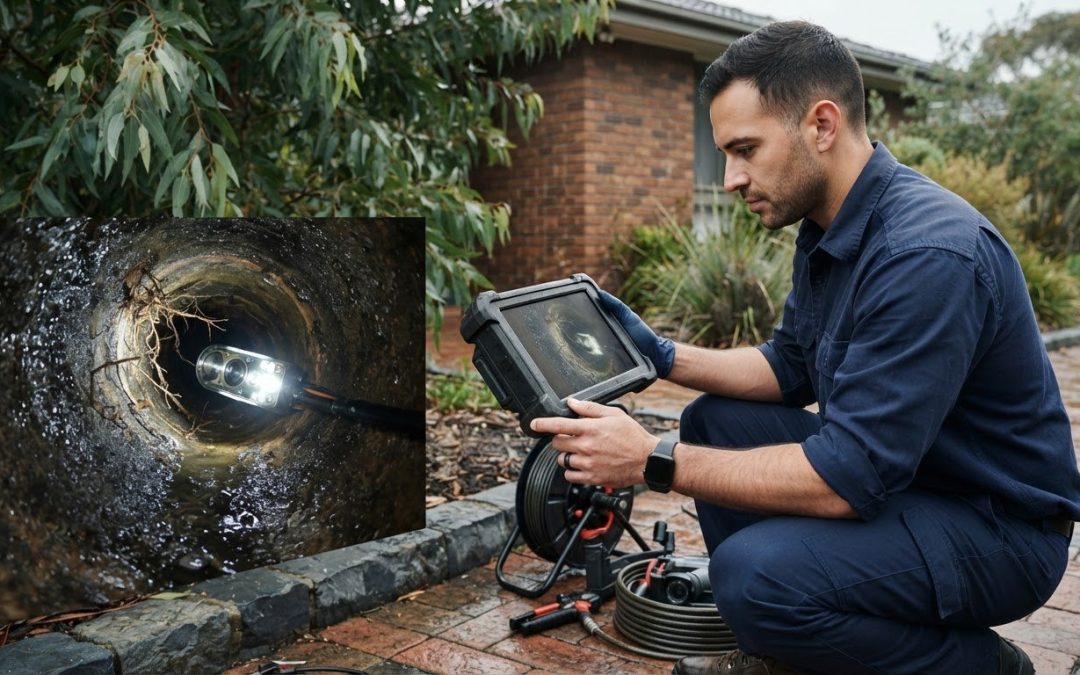
A drain inspection camera can show visible signs of trouble inside a pipe, such as tree roots, cracks, grease or scale. But a camera view may not reveal the full cause of a problem or confirm what repair is needed.
If you’re dealing with a blocked drain, it’s reasonable to want evidence before agreeing to further work. A camera inspection may help narrow down what’s happening, but the footage needs to be interpreted. A blockage, bend or limited access may also prevent the camera from travelling further.
This guide explains how an inspection works, what the camera may reveal and what it can’t confirm on its own. You’ll also learn how findings may guide the next step and what to ask before arranging an assessment. If you’re in Melbourne, check whether CCTV inspection is available for your property and ask what the service includes, such as footage or a report. This can help you understand the likely cause before deciding how to proceed.
Key Takeaways
- A drain inspection camera can show visible signs of roots, cracks, displaced joints or obstructions, but the footage may not confirm the full cause.
- Before arranging an assessment, note when the problem began, which fixtures are affected and whether it keeps returning.
- Ask how the camera inspection is carried out and what access to the drain may be needed.
- Check whether footage, images or a written report are included, and what the findings can reasonably confirm.
- Keep inspection, blockage clearing and pipe repairs distinct. Ask what the recommended next step involves before agreeing to further work.
What Is a Drain Camera and When Is It Useful?
A drain inspection camera is a camera system used to view the inside of accessible pipework. As it moves through a drain, it sends images to a screen so the operator can assess visible conditions along the route.
A camera inspection may help investigate a blockage that keeps returning, suspected root entry or unexplained drainage trouble. The footage can provide clues for a plumber to assess, but it doesn’t automatically confirm the full cause. It also won’t clear a blockage or repair a damaged pipe.
Camera inspection is diagnostic: it looks inside the pipe. Drain clearing removes an obstruction, while pipe repair addresses damage. These are separate tasks and may require different methods. The broader idea of inspection includes pipeline video inspection, where a camera is used to assess infrastructure from within.
What happens during a CCTV drain inspection?
The technician first needs a suitable access point, such as an accessible drain opening. The available entry point and site conditions affect how the inspection can proceed. The camera is then guided into the pipe, and the operator reviews the images on a screen.
The route and view depend on the drain, access and equipment. Bends, obstructions or limited visibility may affect how far the camera travels and what it can show. Ask which areas can be checked and whether you’ll receive footage, images or a report.
When might a camera inspection be considered?
A plumber may consider a visual inspection if blockages recur, roots are suspected or drainage problems remain unexplained after an initial assessment. These symptoms can help guide the investigation, but not every slow drain or blockage needs a camera.
Describe what’s happening and how often the problem returns. The plumber can assess the symptoms and available access, then explain whether a camera inspection may be a suitable next step. If you’re arranging blocked drain help in Melbourne, confirm whether CCTV inspection is available for your property and what it includes before booking.
How a Drain Inspection Camera Moves Through and Checks a Pipe
A drain inspection generally follows a practical sequence: check access, guide the camera into the pipe, watch the live view and discuss what’s visible. The operator controls the camera and interprets the footage as conditions allow. It’s a visual check of the route inspected, not a guarantee that every part of the drainage system can be seen.
Camera footage shows visible pipe conditions along the route inspected. Bends, deposits, standing water or restricted access may affect how far the camera travels and how clear the view is. A mark on screen can guide further assessment, but it needs to be considered alongside your symptoms and the conditions at the property.
How does the camera enter the drain?
The technician assesses the drain and site to choose a suitable access point. A flexible cable is commonly used to guide the camera through pipework, but the entry point and method depend on what’s accessible. The operator feeds and controls the cable, adjusting its position as the route allows. Ask what access is needed before arranging an inspection.
What happens while the footage is reviewed?
The operator may pause or reposition the camera to examine a visible area more closely. They can explain what they observe in plain language and relate it to your symptoms, such as a blockage that keeps returning. Ask in advance whether the provider supplies recordings, still images or a written report. Don’t assume these are included.
The view also depends on the equipment and the condition of the pipe. Industry coverage of the High Definition Closed-Circuit-Television (HDCCTV) camera discusses camera technology used for pipeline inspection. For any inspection, ask what the operator can see along the accessible route and where visibility or access limits the assessment.
Before booking, confirm whether camera inspection is available for your property, what access is required and what you’ll receive after the footage is reviewed. If you need help with a blocked drain in Melbourne, you can ask Denservices about block drain help and check whether a camera inspection is offered for your situation.
What a Drain Inspection Camera Can Find, and What It Cannot Confirm
A drain inspection camera can show visible signs of trouble along the pipe route it reaches. That evidence can help a plumber investigate, but seeing a possible fault isn’t the same as confirming its full cause or deciding exactly how to fix it. Footage needs to be interpreted alongside your symptoms and the conditions at the property.
Which drain problems may appear on camera?
Depending on access and visibility, footage may show roots entering a pipe, a crack, a joint that appears out of line or an obstruction. These are observations, not automatic diagnoses. For example, an obstruction may be relevant to a recurring blockage, but the footage alone may not explain why it formed or whether there’s another issue elsewhere.
| Possible visible finding |
What it may help a plumber assess |
| Roots in the pipe |
Whether root entry may be contributing to a blockage or restricted flow. |
| Crack or damaged-looking section |
Whether further assessment of possible pipe damage is needed. |
| Joint that appears displaced |
Whether movement at that point may be affecting the drain. |
| Grease, debris or another obstruction |
Where a blockage may be affecting the inspected route. |
These are possible findings, not guarantees. The camera view may not identify every pipe material or hidden defect. A plumber can explain what a visible sign may mean and whether it fits the drainage symptoms you’ve described.
Why can a camera inspection have limits?
Water, debris, bends, restricted access and poor visibility can limit what the camera shows. It may not travel the full route, and an area that can’t be seen clearly can’t be assessed from that footage. The camera records visible conditions along the section inspected, not the complete state of every connected pipe.
A finding also doesn’t confirm the full repair scope or outcome. A crack on screen, for example, may need to be considered alongside its location, your symptoms and any areas the camera couldn’t reach. A sewer scope inspection can provide a visual assessment, but its practical value depends on understanding what was inspected and what the observations mean for the property.
Ask the technician: Which sections did you inspect? Were any areas inaccessible or unclear? What do the visible findings suggest, and what can’t the footage confirm? Clear answers help separate evidence from assumptions before you decide on a next step.
How to Prepare for a Drain Camera Inspection in Melbourne
Gather the details before you call. A clear description helps a plumbing provider assess the problem and discuss whether a drain inspection camera may be suitable. It also helps avoid guessing at the cause before the drain has been checked.
Make a quick note of:
- When the issue started, and whether it has happened before.
- Which fixtures are affected, such as a sink, toilet or floor drain.
- What you’ve noticed, such as slow drainage, gurgling, smells or water backing up.
- Whether the problem affects one area or several.
- Any previous blockages or recent plumbing work you know about.
What information should you give the plumber?
Describe what you can observe, rather than what you think caused it. For example, explain that the kitchen sink drains slowly and the issue has returned, or that several fixtures are affected. Mention any previous blockages or recent work if you know about it. If there’s an overflow or active damage, explain exactly what’s happening when you call for help.
What questions should you ask before the inspection?
Check whether a camera inspection suits the symptoms and whether the relevant drain can be accessed. Ask what the inspection covers, how the findings will be explained, and whether footage, images or a written report are available. These details can vary, so confirm them before booking rather than assuming they’re included.
Clarify what happens next. Ask whether any recommended blockage clearing or pipe repair is separate from the inspection, and whether you’ll be asked to approve that work before it starts. Inspection helps assess visible conditions, but it doesn’t automatically clear a blockage or fix damage.
For Melbourne properties, confirm the provider covers your location and offers CCTV drain inspection before arranging a visit. Denservices provides plumbing and block drain services. Ask whether camera inspection is available for your situation and what assessment options are offered. Contact Denservices about block drain help to discuss the issue.
What to Do After a Drain Camera Finds a Problem
Use the footage to understand what was observed, then ask how it relates to the symptoms at your property. A camera may show a visible obstruction or a damaged-looking section, but that finding alone doesn’t determine what work is needed.
Inspection evidence informs an assessment but does not automatically determine a repair. Inspection, blockage clearing and pipe repair are separate tasks. Clearing may address an obstruction, while repair may be considered if damage is assessed. Ask what each recommended step involves, whether it’s separate work and what you’re being asked to approve before proceeding.
How should you interpret the inspection findings?
Ask the technician to identify what they saw and explain how it could relate to your drainage symptoms. Confirm which sections the drain inspection camera reached and whether water, debris, bends or access limits affected the view. Footage isn’t a guarantee of the entire pipe’s condition or how it will perform later. If a finding is unclear, ask what can be confirmed and what remains uncertain.
- Which part of the drain showed the issue?
- Could this finding explain the symptoms I reported?
- Were any sections inaccessible or difficult to see?
- What work do you recommend, and is it separate from the inspection?
How can Melbourne customers arrange blocked drain help?
Denservices lists block drain and plumbing services and operates primarily in Melbourne. Ask whether CCTV drain inspection is available for your issue and location, what it includes, and how the findings will be explained. Confirm any proposed clearing or repair work separately before agreeing to it.
A drain inspection camera can show visible conditions inside the pipe along the route inspected. It can help guide an assessment, but the footage may not confirm every fault or determine the repair. Before deciding how to proceed, ask what was seen, which areas were checked and what work is recommended.
Keep inspection, blockage clearing and pipe repair separate in your discussion. Confirm whether a camera inspection is suitable for your issue, whether it’s available at your Melbourne property and what the service includes. Denservices lists block drain and plumbing services, and accepts 24/7 emergency call-outs through its national phone line. Ask directly about camera inspection availability and what assessment options may suit your situation.
Ask Denservices about blocked drain help and explain what’s happening. You can also call 1300 580 415 to discuss your plumbing issue and ask what the next step may involve.
Frequently Asked Questions
What is a drain inspection camera?
A drain inspection camera is a camera system used to view the inside of accessible pipework. During an inspection, a technician guides it through a suitable entry point while images appear on a screen. The view can help investigate recurring blockages or suspected pipe damage. It’s a diagnostic check, not a way to clear a blockage or repair a pipe.
What can a CCTV drain inspection show?
A CCTV inspection may show visible signs such as roots in a pipe, cracks, a joint that appears out of line or an obstruction. These observations can help a plumber assess possible causes of drainage trouble. What the camera shows depends on access and visibility. The footage may not establish the full cause, show every affected section or confirm exactly what work is needed.
Can a drain inspection camera clear a blocked drain?
No. A drain inspection camera provides a view inside accessible pipework, but it doesn’t remove an obstruction. Clearing a blockage is separate work and may require a different method. If an inspection identifies a possible problem, ask the plumber to explain what the footage shows, what it can’t confirm and whether clearing or repair work is recommended. Confirm any further work before proceeding.
How does a plumber use a drain inspection camera?
A plumber first assesses the drain and site to find a suitable access point. The camera is guided through accessible pipework while the operator watches the images on a screen. They may pause or reposition it to look more closely at a visible area. Bends, water, debris or limited access can affect the view, so ask which sections were checked and what the footage can show.
Will a drain camera find tree roots or a cracked pipe?
A drain camera may show visible signs of root entry or a crack if the affected area is accessible and clear enough to see. The operator needs to interpret what appears on screen alongside the drainage symptoms and site conditions. Footage may not reveal the full extent or cause of a problem. Ask what was observed, how it relates to your symptoms and whether any areas couldn’t be checked.
Is a drain camera inspection always needed for a blockage?
No. A camera inspection isn’t automatically needed for every blockage or slow drain. A plumber can assess the symptoms, whether the problem recurs and what access is available before recommending an approach. If blockages keep returning or the cause remains unclear, ask whether a camera inspection could help. The right next step depends on the specific issue, not just the fact that a drain is blocked.
Can a drain inspection camera check every part of a pipe?
No. A camera can only show areas it can access and where visibility allows. Bends, standing water, debris or restricted access may limit how far it travels or what the operator can see. For an inspection in Melbourne, ask which sections can be checked, whether any areas may be inaccessible and how those limits affect the findings. The footage isn’t a guarantee of the entire pipe’s condition.