
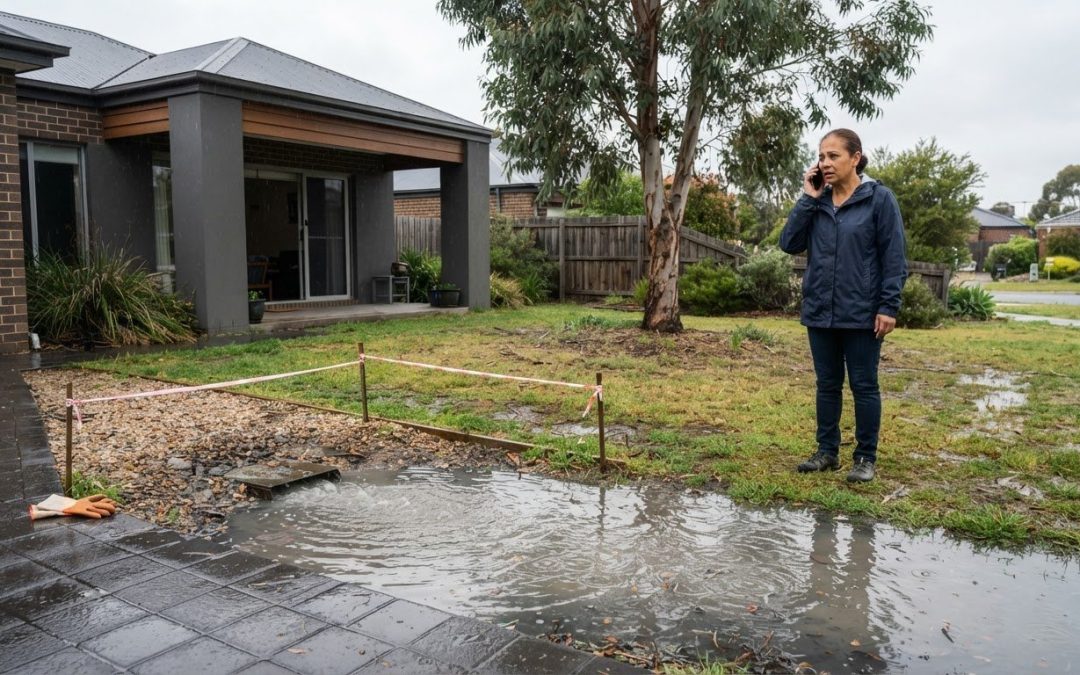
An overflowing sewer gully isn’t a problem to wait out. Every toilet flush, shower or washing machine cycle can send more wastewater into your yard or towards your home. Stop using water fixtures where practical, and keep people and pets away from the affected area.
It’s understandable to worry about sewage exposure and wonder whether the blockage is on your property or in the main sewer. Don’t try to clear the gully or touch the wastewater. Tree roots, grease, foreign objects or another restriction in the pipes can contribute to a blockage, but the visible overflow alone can’t show where the problem is.
This guide explains what an overflowing sewer gully means, what to do safely and when Melbourne homeowners should call a plumber. You’ll learn what to avoid while you wait, which details to share when reporting the problem, and how a plumber can investigate the drainage. If the overflow continues or sewage is creating a health concern, contact a plumber promptly. They can assess the symptoms and help determine whether you should also contact your water retailer.
Key Takeaways
- An overflow relief gully (ORG) is an external outlet for wastewater. An overflowing sewer gully can signal a restricted drain that needs investigation.
- Visible signs can point to a drainage problem, but they can’t confirm where the blockage or fault is.
- If the overflow stops, don’t assume the blockage has cleared. Watch for recurring signs and arrange an assessment if they return.
- A plumber can check affected drainage points and decide whether drain clearing or further investigation is needed.
- Share when the overflow began, what you’ve noticed and whether other drains are affected to help guide the assessment.
Overflowing sewer gully in Melbourne: what is happening?
An overflow relief gully, or ORG, is an outside outlet connected to a home’s sewer drainage. If wastewater spills from it, a sewer drain may be blocked or restricted. The gully is designed to provide an escape point outside, helping reduce the risk of sewage flowing back through indoor fixtures. An overflow is a warning sign, not proof of where the blockage is or whether it has cleared.
Where is the overflow relief gully and what does it do?
Look for a grated fitting at ground level outside. It may be near a bathroom or laundry, but its location varies between homes. If wastewater backs up in the sewer drain, the gully can act as a relief point and direct it outdoors rather than into the house.
The ORG doesn’t clear a blockage or make an overflow safe to approach. Keep its opening uncovered and unobstructed. Don’t place pots, leaves, soil or other objects over it, and don’t remove or alter the fitting. Covering it can interfere with its relief role.
Is it sewer overflow or stormwater?
Rain can leave water pooled on paths, lawns or other low spots. Suspected sewer overflow may have a foul odour or visible wastewater. Nearby toilets, showers or floor wastes may also drain slowly or back up. These clues can help you describe the problem, but they can’t confirm the source. Water can spread from one area to another, and appearances can be misleading.
Treat suspected sewage as contaminated.
Keep your distance rather than touching the water or checking it closely. If you’re unsure whether the pooling is rainwater or wastewater, note when it appeared and whether it coincided with rain or plumbing use. Share those observations with a plumber. Stormwater and sewer lines serve different purposes, though their arrangement can vary. This overview of drainage systems explains the distinction.
An overflowing sewer gully in Melbourne should be treated as a possible drainage problem, even if the water is outside and indoor fixtures still seem to work. The visible overflow is a symptom. A plumber can assess the affected drainage points and investigate what’s causing it.
Why does a sewer gully overflow, and what can the signs tell you?
An overflowing sewer gully can have several causes. Wastewater may be struggling to pass a blockage or restriction in a pipe, or there may be a fault further along the drain. The visible overflow is a clue, not a diagnosis. You can’t tell from the gully alone where the problem sits or what caused it.
Possible contributors include debris, unsuitable items entering the drain and build-up that narrows the pipe. Tree roots can enter damaged or vulnerable pipes, and pipes can be damaged for other reasons. These are possibilities, not conclusions. A plumber needs to assess the drainage system to identify the cause.
Heavy rain may happen around the same time as an overflow, but timing alone doesn’t prove rain caused the sewer problem. Note whether symptoms started during or after rain and tell the plumber. That detail can help with the assessment, but it doesn’t confirm whether the issue is in a private drain or further along the sewer.
Common causes of an overflowing sewer gully
Fats, oils, grease and tree roots are among the issues described in the US Environmental Protection Agency’s overview of the causes of sewer overflows. In a home, debris, unsuitable items and build-up may also contribute to a restriction. Don’t try to locate or remove a blockage yourself. A plumber can assess what’s happening and recommend the next step.
What other warning signs should you check?
From a safe distance, consider whether toilets, showers, sinks or floor wastes are also slow or backing up. Several affected fixtures may point to a shared drain problem, though they don’t identify its location. Note recurring foul odours, repeated gully overflow or wastewater appearing at another drain.
If symptoms worsen, return after appearing to stop, or affect more than one drainage point, seek prompt advice from a plumber. Share what you’ve observed, when it began and which fixtures are affected. For help with a drainage concern, review Denservices’ plumbing and blocked-drain services and confirm coverage for your Melbourne address.
Can you wait or fix an overflowing sewer gully yourself?
An outdoor overflow still needs attention. Sewage can expose people and pets to contamination, and wastewater may spread towards the house or other parts of the yard. Don’t assume the problem is harmless because it’s outside. If the flow pauses, that also doesn’t prove the blockage has cleared. It may return when more wastewater enters the drain.
When does an overflow need urgent attention?
Get prompt plumbing advice if sewage is actively spilling, wastewater is backing up indoors or the overflow keeps happening. Keep children and pets well away from the affected area. If wastewater enters a living area, avoid contact and seek professional guidance on what to do next. For local health advice on protecting yourself and your family, follow the Better Health Channel’s guidance on sewage overflows at home.
While you arrange help, stick to safe observation. Note whether the overflow is continuing and which fixtures are affected, but don’t approach or touch wastewater to check it. Keep others away until the situation has been assessed.
Why should you avoid DIY drain clearing?
Don’t reach into the gully or handle wastewater, contaminated objects or chemicals you can’t identify. Avoid caustic drain products and improvised tools. They can create additional hazards and may complicate a plumber’s assessment. Never lift, dismantle or modify the gully or other drainage fittings. Leave inspection and clearing to a plumber who can assess the problem safely.
It can be tempting to wait if the water drains away on its own. But a temporary stop doesn’t show whether the restriction has shifted, remains in place or is likely to cause another backup. If symptoms return or worsen, seek professional advice rather than trying another DIY fix.
For general information about blocked drain clearing with hydro jetting in Melbourne, use a guide that is specific to Victorian regulations and plumbing standards. For an active overflowing sewer gully at your Melbourne home, contact Denservices and confirm they cover your address.
What should you do if a sewer gully overflows in Melbourne?
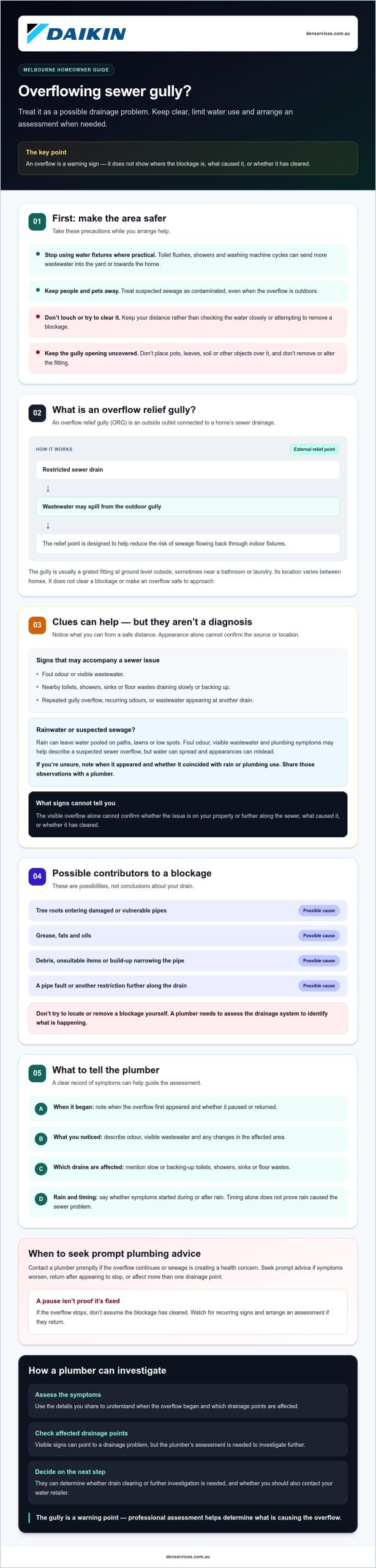
Act in order: keep clear, reduce water use, note what you can see safely, then arrange plumbing help. These steps can limit further wastewater discharge and give the plumber useful details.
- Keep people and pets away. Don’t touch wastewater or contaminated surfaces. Avoid walking through the affected area.
- Reduce water entering household drains. Limit toilet, shower, laundry and sink use while a sewer blockage is suspected. Don’t compromise essential hygiene or safety.
- Observe from a safe distance. Note when the overflow began, whether it’s still active and if it returns. Check whether indoor fixtures or other drains are affected without approaching the wastewater.
- Arrange help. Contact a plumber if the overflow continues, recurs or is accompanied by indoor backups. Don’t hose wastewater into a stormwater drain or onto neighbouring property.
Safe steps to take before the plumber arrives
Keep access to the area clear for the person attending, but don’t move or handle contaminated objects. If wastewater has entered a living area, avoid contact and seek professional guidance. Don’t try to wash the spill away. Keep a record of what you observe instead.
What information should you give the plumber?
Be ready to share your Melbourne suburb and property address, where the overflow is, when it started and whether it’s still active. Report any slow or backing-up toilets, showers, sinks or floor wastes. Mention unusual odours, repeat incidents and whether the issue began during or after heavy rain. These details help the plumber assess the symptoms and decide what to check.
A plumber may need to investigate the pipe to locate a restriction or fault. Depending on the assessment, this could include a camera inspection and a discussion of the drain inspection camera findings. No single method is right for every overflow, so leave the diagnosis to the professional.
If you suspect the public sewer may be involved, check which water retailer is responsible for your property using your address, then contact them to report the concern. A plumber can also help assess whether the issue appears to be within the property’s drainage or further along the sewer.
For plumbing help with a sewer gully overflow, contact Denservices about plumbing support and confirm service coverage for your address.
What will a plumber do about an overflowing sewer gully?
A plumber will assess the overflow before deciding what to do. They’ll ask what you’ve noticed, check the affected drainage points and consider whether other fixtures are slow or backing up. This helps them work out what needs investigation. The visible overflow alone can’t confirm the blockage’s location or cause.
How a plumber investigates the blockage
Expect questions about when the problem started, whether it has happened before and which toilets, showers, sinks or floor wastes are affected. The plumber may carry out visual checks of accessible drainage points. If more information is needed, a camera inspection may help locate a problem inside a pipe. It’s an option, not an automatic step for every job.
After assessing the symptoms, the plumber can explain whether drain clearing or further investigation is appropriate. The method depends on what they find. A blocked drain clearing guide may offer general information, but professional advice tailored to your specific Melbourne property is always recommended for an overflowing sewer gully.
When to contact Denservices for plumbing help
Request plumbing help if wastewater is actively overflowing, sewage has backed up indoors or the symptoms keep returning. Tell the plumber whether the overflow is still happening and what you’ve already observed. Don’t try to clear the blockage or dismantle fittings while you wait.
Denservices provides plumbing services, blocked-drain services and emergency call-outs. Emergency call-out availability and coverage can depend on your location and the issue. Confirm that Denservices can assist at your Melbourne address, and ask whether an emergency call-out is available for your situation.
Before arranging a visit, ask what the assessment may involve and what information the plumber needs from you. A clear account of the symptoms can help them decide what to check first, but the cause and next step can only be determined after assessment. There’s no need to guess or attempt a repair yourself.
If you need help with an overflowing sewer gully, contact Denservices to discuss the symptoms and confirm coverage for your address.
Take the next step to protect your home
An overflowing sewer gully is a warning sign, even if the spill is outside or stops on its own. Keep people and pets clear, limit water use and don’t attempt to clear or dismantle the drain yourself. A plumber can assess the affected drainage points and decide whether clearing or further investigation is needed.
Note when the overflow began, whether it’s still active and which fixtures are affected. These details help the plumber understand what’s happening. If you suspect the public sewer may be involved, check the responsible water retailer for your address as well.
Denservices lists plumbing and blocked-drain services and advertises 24/7 emergency call-outs through its national phone line. Call 1300 580 415 or contact the business by email, and confirm availability for your Melbourne address and this issue. Contact Denservices for plumbing help and explain what you’ve observed.
With clear information and professional assessment, you can take the next step with confidence.
Frequently Asked Questions
What should I do first when my sewer gully is overflowing?
First, keep people and pets away from the affected area. Don’t touch the wastewater or try to clear the gully. Limit toilet flushing, showers, sinks and laundry use while a blockage is suspected. Contact a plumber if the overflow is active, keeps returning or is linked to indoor backups. Note when it started and which fixtures are affected so you can give the plumber clear details.
Is an overflowing sewer gully an emergency?
An active sewage overflow, wastewater entering the home or several fixtures backing up needs prompt attention. Keep clear and arrange professional plumbing advice. If the overflow stops, don’t assume the blockage has cleared. Watch for further symptoms and contact a plumber if they return. Don’t enter or handle a contaminated area to investigate. If wastewater has reached a living space, avoid contact and seek professional guidance.
Can I use the toilet when the sewer gully is overflowing?
Avoid flushing the toilet while a sewer blockage is suspected. Limit showers, sinks and laundry appliances too, where practical, because they also send wastewater into the drainage system and may worsen a backup. If you need to use essential facilities, ask a plumber what’s appropriate for your situation. Don’t treat a pause in the overflow as proof that normal water use is safe.
Why is my sewer gully overflowing when it rains?
Rain may coincide with an overflow, but timing alone can’t confirm the cause. A blockage or restriction in the sewer drain may still be involved. Note whether indoor fixtures are slow, whether the water has a foul odour and whether the problem returns. Don’t assume it’s only stormwater. If symptoms persist or recur, arrange a plumber’s assessment to help identify what’s happening.
Can I pour drain cleaner into an overflowing sewer gully?
No. Don’t pour chemical drain cleaner into an overflowing gully. You could expose yourself or others to hazardous substances, and the product may not address the cause of the overflow. Don’t reach into the opening or use improvised tools either. Keep clear, reduce water entering the drains where practical, and contact a plumber for an assessment and advice on the next step.
Who is responsible for a sewer gully in Melbourne?
Responsibility depends on where the problem is and which part of the drainage system is affected. The gully alone can’t show whether the issue is within the property’s pipes or the public sewer. Ask a plumber to assess the blockage, and check the responsible water retailer using your Melbourne property address if a public sewer problem may be involved. Don’t assume who’s responsible before the issue is investigated.
Will an overflowing sewer gully clear by itself?
The visible overflow may stop temporarily, but that doesn’t prove the underlying restriction has cleared. If other drains remain slow, wastewater appears again or the problem recurs, arrange professional advice. Don’t test the drain by running large amounts of water. A plumber can assess the symptoms and decide whether drain clearing or further investigation is needed. Keep monitoring from a safe distance until you’ve received advice.