A blocked sink can be a sign that the problem sits further down the drain. When one fixture backs up, it can be hard to tell whether the blockage is local or affecting a shared line. If you’re dealing with a blocked drain or looking for blocked drain clearing in Melbourne, start by limiting water use and noting which fixtures are affected.
The right next step depends on the symptoms. Stop using fixtures that are backing up, and don’t pour chemical cleaner into the drain. A plumber may ask when the problem started, check which drains are affected and assess the likely cause before recommending how to clear it.
This guide explains what you can safely do while you wait, when to call a plumber and what professional clearing may involve. Denservices primarily operates across Melbourne, so confirm coverage for your address before requesting help.
Key Takeaways
- Compare which fixtures are affected to help judge whether a blockage may extend beyond one drain.
- Blockages can involve waste build-up, foreign objects, tree roots or damaged pipes.
- A minor slowdown may still need a plumber’s assessment if it keeps returning or wastewater backs up.
- Note the symptoms and access details before requesting blocked-drain help.
- Denservices primarily operates in Melbourne and serves some Brisbane suburbs. Confirm coverage for your address before arranging a call-out.
Blocked drain clearing in Brisbane: recognise the problem and act safely
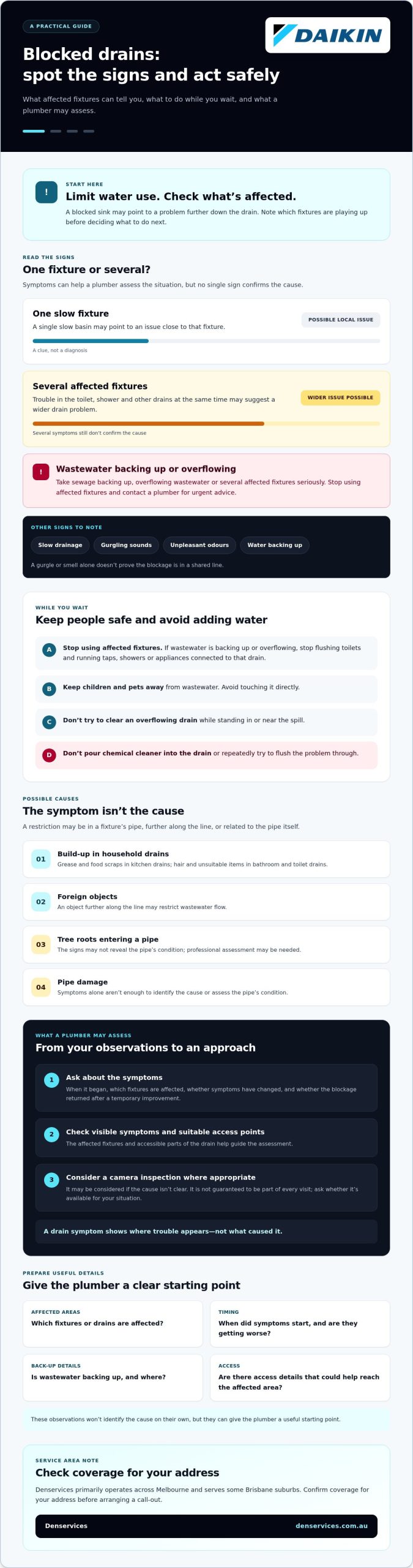
A slow kitchen sink is disruptive. Wastewater pushing up through a floor drain is more urgent. Check whether the problem is limited to one fixture or affecting several. A single slow basin may point to an issue close to that fixture, while trouble in the toilet, shower and other drains at the same time may suggest a wider drain problem. Symptoms can help a plumber assess the situation, but no single sign confirms the cause.
Which blocked-drain signs need prompt attention?
Watch for slow drainage, gurgling sounds, unpleasant odours and water backing up where it should drain away. These can indicate restricted wastewater flow, but a gurgle or smell alone doesn’t prove the blockage is in a shared line. Note what’s happening and which fixtures are affected.
Take sewage backing up, overflowing wastewater or several affected fixtures seriously. Stop using the affected fixtures and contact a plumber for urgent advice. When arranging help, explain whether water is draining slowly or coming back into the property. That distinction helps the plumber understand the disruption and what to assess first.
Drain pipes work as part of a connected system. For a simple overview of how drainage systems work, see how waste pipes and vents help move wastewater through a building. The system’s layout can affect symptoms, so don’t assume that a blockage sits directly beneath the fixture that’s playing up.
What should you do before the plumber arrives?
If wastewater is overflowing or backing up, stop flushing toilets and running taps, showers or appliances connected to the affected drain. More water may add to the overflow. Keep children and pets away from wastewater, avoid touching it directly and don’t try to clear an overflowing drain while standing in or near the spill.
Give the plumber clear details when you call. Note:
- Which fixtures or drains are affected.
- When the symptoms started and whether they’re getting worse.
- Whether wastewater is backing up, and where.
- Any access details that could help the plumber reach the affected area.
These observations won’t identify the cause on their own, but they give the plumber a useful starting point. Avoid repeated attempts to flush the problem through. Keep affected fixtures out of use until you’ve received advice or the drain has been assessed.
Why drains block and how a Brisbane plumber assesses the cause
A blocked drain means wastewater can’t flow freely through a pipe. The restriction may come from a build-up in a fixture’s pipe, an object further along the line or a problem with the pipe itself. The cause depends on the drain and property, so symptoms alone aren’t enough to identify it.
A drain symptom shows where trouble appears, not what caused it. A plumber needs to assess the affected fixtures and accessible parts of the drain before deciding what to do. This helps avoid treating an assumption instead of investigating the source.
Common causes of blocked household drains
Household obstructions can include grease and food scraps in kitchen drains, or hair and unsuitable items in bathroom and toilet drains. These may collect in a pipe and restrict water flow. Don’t assume the same cause applies to every blockage.
Tree roots entering a pipe or damage to the pipe are also possible causes. These need professional assessment, as the signs may not reveal the pipe’s condition. If you rent, the Residential Tenancies Authority’s rules on drain responsibility can help clarify how responsibility may depend on the cause of a drainage problem.
What happens during a drain assessment?
The plumber may ask when the problem began, which fixtures are affected and whether the symptoms have changed. Share details such as whether the blockage returned after a temporary improvement. This information helps guide the inspection, but doesn’t confirm the cause.
The plumber may then check visible symptoms and suitable access points before choosing an approach. If the cause isn’t clear, a camera inspection may be considered where appropriate. It’s a possible diagnostic option, not a guaranteed part of every visit. Ask the provider whether it’s available for your situation.
For blocked drain clearing brisbane, describe the symptoms and ask what assessment may be needed before work begins. Denservices provides blocked-drain clearing and plumbing services, primarily in Melbourne and in some Brisbane suburbs. Review its blocked-drain clearing service and confirm whether your address is covered before requesting help.
DIY fixes or professional blocked-drain clearing: how to choose
A minor slowdown in one basin is different from a blockage that keeps returning or wastewater backing up. Match your response to the signs. A low-risk check may be reasonable for visible debris near a plughole. Stop if the problem continues, spreads to other fixtures or involves wastewater coming back into the property.
Avoid repeated chemical treatments and improvised tools. Chemicals can create hazards, especially if products are mixed, and forceful or unsuitable tools may damage pipes. If you’ve already used a drain cleaner, tell the plumber which product you used. Don’t add another treatment or combine it with a different product.
When is a simple household step reasonable?
If the issue is limited to one fixture and you can see debris at the plughole, remove it carefully without pushing it further into the pipe. Follow the label on any household product you choose, and never mix drain-cleaning chemicals. Don’t dismantle pipework or force tools into a drain. If the water still drains poorly after a safe, simple step, stop and seek advice.
When should you book a professional drain clearing?
Contact a plumber if blockages recur, several fixtures are affected or wastewater overflows or backs up. A technician can assess whether the restriction appears close to one fixture or further along the drain. That assessment matters because the right response depends on the blockage and the pipe access available at the property.
There isn’t one clearing approach for every drain. A plumber considers the symptoms, accessible points and likely cause before choosing what to do. Don’t assume a particular tool or method will suit your pipe, and be wary of anyone promising a guaranteed fix before assessing the problem. Ask what the proposed work involves and whether further inspection may be needed.
For blocked drain clearing brisbane, explain which fixtures are affected, whether the issue has happened before and if wastewater is backing up. Denservices provides blocked-drain clearing and plumbing services, primarily in Melbourne and in some Brisbane suburbs. Confirm your address and call-out availability before arranging help.
Preparing for Blocked Drain Clearing at Your Brisbane Home
Having a few details ready before you call can help the plumber understand the problem and check whether they can assist at your address. Denservices primarily operates in Melbourne and provides blocked-drain clearing in some Brisbane suburbs, not every suburb. Confirm your exact address is covered, then check whether a call-out is available at your requested time. Emergency call-out requests can be made 24/7, but availability for your address and time needs to be confirmed.
What details should you share when booking?
Have your full Brisbane address and preferred contact details ready. Describe which drains or fixtures are affected, when the issue began and whether you can see wastewater backing up or overflowing. Mention if the problem is getting worse or has happened before. Clear details help the provider understand the situation, but don’t assume they confirm the cause.
Also explain any access limits, such as a locked gate, narrow access path or drain point that’s difficult to reach. Ask whether someone needs to be home and confirm the expected timing for the call-out. Denservices accepts emergency call-out requests on 1300 580 415. Confirm address coverage and availability for the time you need.
How can you make the property ready for an assessment?
Keep the route to affected fixtures and accessible drain locations clear where it’s safe and practical. Point out which fixtures are affected and show the plumber any visible symptoms. Don’t lift heavy covers or enter pits to locate a blockage. Leave inspection work to qualified tradespeople, and keep children and pets away from wastewater.
Use this quick checklist before making your request:
- Full Brisbane address and contact details.
- Affected fixtures and when the problem started.
- Any visible overflow, wastewater backing up or worsening symptoms.
- Gate, access or drain-location details.
- Confirmation of suburb coverage and call-out availability at your requested time.
For blocked drain clearing brisbane, give the provider a clear picture of the symptoms and access conditions. This makes it easier to discuss what happens next without guessing at the cause or promising a particular response time. Ask Denservices about blocked-drain help and confirm your address is within its Brisbane service area.
Request blocked-drain clearing in Brisbane from Denservices
Denservices provides blocked-drain clearing and plumbing services, primarily in Melbourne and in some Brisbane suburbs. Confirm your exact address is covered before arranging a visit. You can request an emergency call-out through the national phone line, 1300 580 415. Emergency call-out requests can be made 24/7, but a request doesn’t confirm service availability at your address or at a particular time. Check coverage and appointment availability when you call.
What to expect when you request a call-out
Explain what’s happening in plain terms. Tell the team which fixtures are affected, when the blockage began and whether wastewater is backing up or overflowing. Mention if several drains are affected, as that helps describe the urgency and scope of the problem.
Give your full address and ask whether your suburb is currently within the service area. Confirm whether a call-out is available at the time you need, and ask about any relevant booking details before proceeding. Fees, arrival times and the result of the work depend on the specific request, so confirm these directly rather than assuming them.
What happens after the initial assessment?
After inspecting the issue, the technician can explain what they’ve found and recommend a next step. The appropriate work depends on the symptoms, access and what the inspection shows. If the blockage returns or pipe damage is suspected, further diagnosis may be needed before deciding how to proceed.
Before work starts, ask what the proposed work involves and whether additional assessment may be required. Make sure you understand the next step and any applicable charges before agreeing to proceed. An initial assessment can guide the response, but it shouldn’t be treated as a promise of a particular repair outcome.
For blocked drain clearing brisbane, describe the problem and confirm suburb coverage and availability directly with Denservices. Contact Denservices to check Brisbane coverage.
Take the next step with a blocked drain
Act on the signs, not assumptions. A single slow fixture may need a different response from recurring blockages, several affected drains or wastewater backing up. Avoid risky DIY attempts, note what’s happening and share those details when you request help.
If you’re looking for blocked drain clearing brisbane, Denservices provides blocked-drain clearing and plumbing services, primarily in Melbourne and in some Brisbane suburbs. Check that your exact address is covered before arranging a call-out. You can request an emergency call-out through the national phone line on 1300 580 415. Confirm availability for your address and requested time when you call.
Get clear on coverage and the next steps before work begins. Contact Denservices to check blocked-drain service in your Brisbane suburb. Have the affected fixtures, symptoms and access details ready when you call.
Frequently Asked Questions
What should I do if a drain is blocked and overflowing?
Stop using fixtures connected to the overflowing drain. Keep children and pets away from wastewater, and don’t handle contaminated water. Contact a plumber promptly, especially if several fixtures are affected or wastewater is entering your property. Describe where the overflow is happening and provide your Brisbane address when booking. Ask the provider to confirm local coverage and emergency call-out availability for your address and requested time. Don’t assume a particular arrival time.
Can I clear a blocked drain myself?
A minor slowdown affecting one fixture may respond to removing visible debris from the plughole, but a home remedy isn’t guaranteed to work. Don’t mix drain-cleaning chemicals or force improvised tools into a pipe, as this may cause harm or damage. Stop if the blockage worsens, returns, spreads to other fixtures or involves wastewater backing up. Sewage or overflow needs professional assessment, not further DIY attempts.
How does a plumber clear a blocked drain?
A plumber first asks about the symptoms and checks the affected fixtures and accessible drain points. The appropriate clearing method depends on the likely obstruction, available pipe access and what the assessment shows. If the blockage keeps returning or pipe damage is suspected, further inspection may be needed. Ask the plumber to explain the findings and proposed next steps before work begins. The method and outcome can’t be confirmed before assessment.
How do I know if the blockage is in the main drain?
Several affected fixtures, gurgling or wastewater backing up can suggest a wider drain problem, but these signs can’t confirm where the blockage is. If wastewater is rising, stop using the affected fixtures and contact a plumber for an assessment. Note which drains are affected and whether the problem has happened before. Share those details when you call, but leave diagnosis of the blockage’s location to the inspection.
Does Denservices clear blocked drains across Brisbane?
Denservices serves some Brisbane suburbs, but not necessarily every Brisbane address. If you’re searching for blocked drain clearing brisbane, provide your full suburb and address so the team can check coverage. Denservices lists blocked-drain clearing and accepts emergency call-out requests through its national phone line, 1300 580 415. Confirm appointment availability directly. A call-out request doesn’t guarantee a booking, after-hours attendance or a particular arrival time.
Can a blocked drain keep coming back after it’s cleared?
Yes, a blockage can return if its underlying cause remains. Recurring material build-up, tree roots or a damaged pipe may need further assessment rather than another temporary clearing attempt. Tell the plumber if the drain has blocked before and describe any recent clearing work. If symptoms return, ask what further diagnosis may be appropriate. No single inspection or clearing method can guarantee that future blockages will be prevented.