
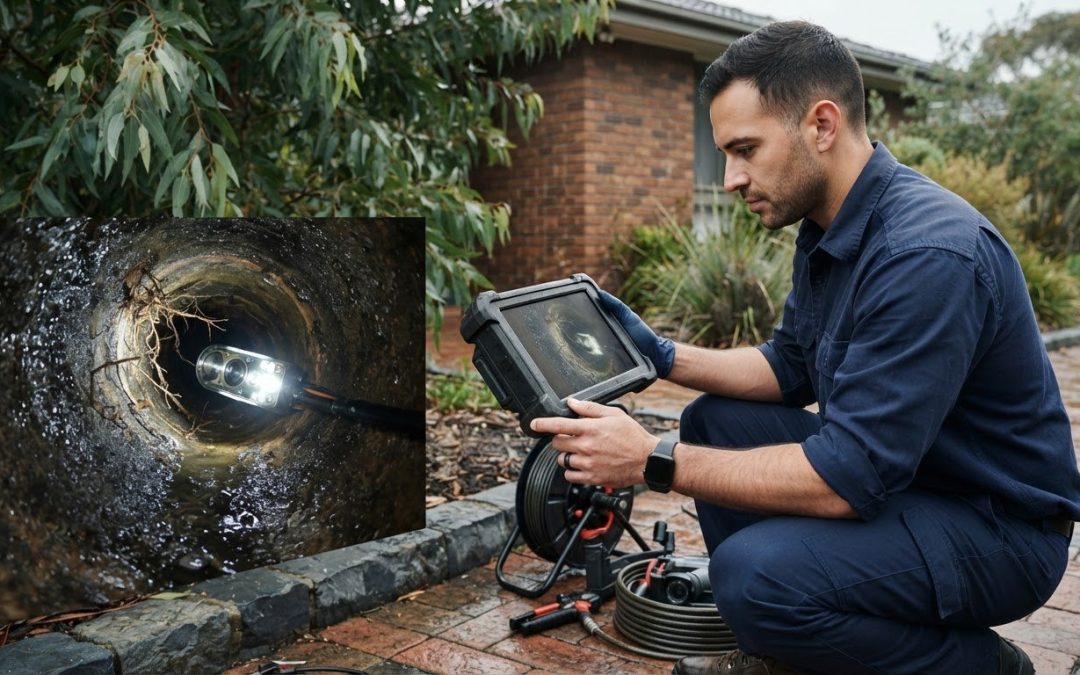
A drain inspection camera can show visible signs of trouble inside a pipe, such as tree roots, cracks, grease or scale. But a camera view may not reveal the full cause of a problem or confirm what repair is needed.
If you’re dealing with a blocked drain, it’s reasonable to want evidence before agreeing to further work. A camera inspection may help narrow down what’s happening, but the footage needs to be interpreted. A blockage, bend or limited access may also prevent the camera from travelling further.
This guide explains how an inspection works, what the camera may reveal and what it can’t confirm on its own. You’ll also learn how findings may guide the next step and what to ask before arranging an assessment. If you’re in Melbourne, check whether CCTV inspection is available for your property and ask what the service includes, such as footage or a report. This can help you understand the likely cause before deciding how to proceed.
Key Takeaways
- A drain inspection camera can show visible signs of roots, cracks, displaced joints or obstructions, but the footage may not confirm the full cause.
- Before arranging an assessment, note when the problem began, which fixtures are affected and whether it keeps returning.
- Ask how the camera inspection is carried out and what access to the drain may be needed.
- Check whether footage, images or a written report are included, and what the findings can reasonably confirm.
- Keep inspection, blockage clearing and pipe repairs distinct. Ask what the recommended next step involves before agreeing to further work.
What Is a Drain Camera and When Is It Useful?
A drain inspection camera is a camera system used to view the inside of accessible pipework. As it moves through a drain, it sends images to a screen so the operator can assess visible conditions along the route.
A camera inspection may help investigate a blockage that keeps returning, suspected root entry or unexplained drainage trouble. The footage can provide clues for a plumber to assess, but it doesn’t automatically confirm the full cause. It also won’t clear a blockage or repair a damaged pipe.
Camera inspection is diagnostic: it looks inside the pipe. Drain clearing removes an obstruction, while pipe repair addresses damage. These are separate tasks and may require different methods. The broader idea of inspection includes pipeline video inspection, where a camera is used to assess infrastructure from within.
What happens during a CCTV drain inspection?
The technician first needs a suitable access point, such as an accessible drain opening. The available entry point and site conditions affect how the inspection can proceed. The camera is then guided into the pipe, and the operator reviews the images on a screen.
The route and view depend on the drain, access and equipment. Bends, obstructions or limited visibility may affect how far the camera travels and what it can show. Ask which areas can be checked and whether you’ll receive footage, images or a report.
When might a camera inspection be considered?
A plumber may consider a visual inspection if blockages recur, roots are suspected or drainage problems remain unexplained after an initial assessment. These symptoms can help guide the investigation, but not every slow drain or blockage needs a camera.
Describe what’s happening and how often the problem returns. The plumber can assess the symptoms and available access, then explain whether a camera inspection may be a suitable next step. If you’re arranging blocked drain help in Melbourne, confirm whether CCTV inspection is available for your property and what it includes before booking.
How a Drain Inspection Camera Moves Through and Checks a Pipe
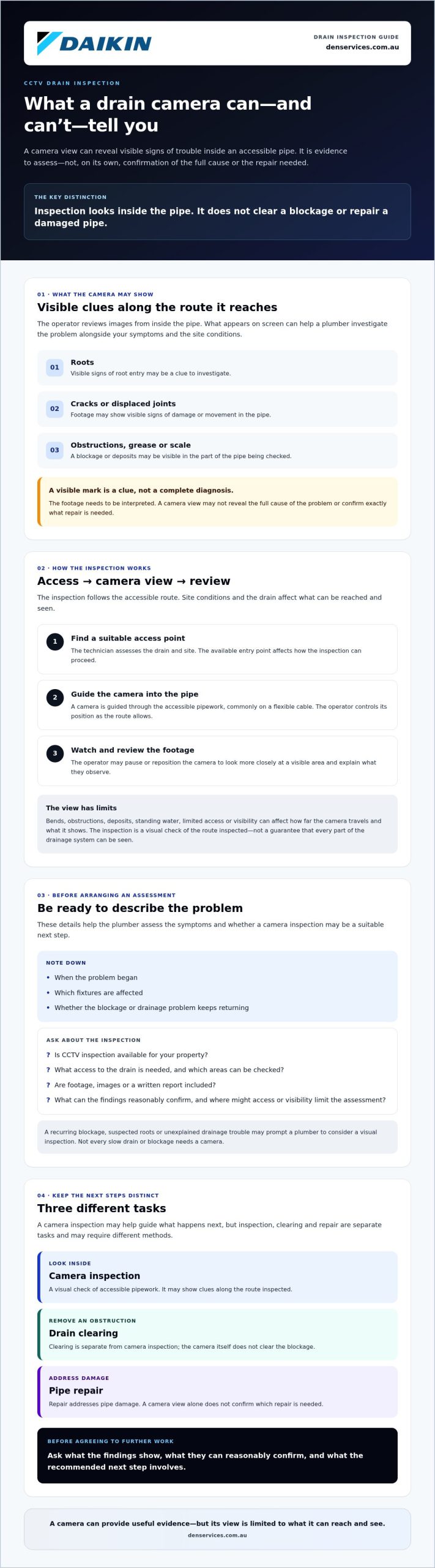
A drain inspection generally follows a practical sequence: check access, guide the camera into the pipe, watch the live view and discuss what’s visible. The operator controls the camera and interprets the footage as conditions allow. It’s a visual check of the route inspected, not a guarantee that every part of the drainage system can be seen.
Camera footage shows visible pipe conditions along the route inspected. Bends, deposits, standing water or restricted access may affect how far the camera travels and how clear the view is. A mark on screen can guide further assessment, but it needs to be considered alongside your symptoms and the conditions at the property.
How does the camera enter the drain?
The technician assesses the drain and site to choose a suitable access point. A flexible cable is commonly used to guide the camera through pipework, but the entry point and method depend on what’s accessible. The operator feeds and controls the cable, adjusting its position as the route allows. Ask what access is needed before arranging an inspection.
What happens while the footage is reviewed?
The operator may pause or reposition the camera to examine a visible area more closely. They can explain what they observe in plain language and relate it to your symptoms, such as a blockage that keeps returning. Ask in advance whether the provider supplies recordings, still images or a written report. Don’t assume these are included.
The view also depends on the equipment and the condition of the pipe. Industry coverage of the High Definition Closed-Circuit-Television (HDCCTV) camera discusses camera technology used for pipeline inspection. For any inspection, ask what the operator can see along the accessible route and where visibility or access limits the assessment.
Before booking, confirm whether camera inspection is available for your property, what access is required and what you’ll receive after the footage is reviewed. If you need help with a blocked drain in Melbourne, you can ask Denservices about block drain help and check whether a camera inspection is offered for your situation.
What a Drain Inspection Camera Can Find, and What It Cannot Confirm
A drain inspection camera can show visible signs of trouble along the pipe route it reaches. That evidence can help a plumber investigate, but seeing a possible fault isn’t the same as confirming its full cause or deciding exactly how to fix it. Footage needs to be interpreted alongside your symptoms and the conditions at the property.
Which drain problems may appear on camera?
Depending on access and visibility, footage may show roots entering a pipe, a crack, a joint that appears out of line or an obstruction. These are observations, not automatic diagnoses. For example, an obstruction may be relevant to a recurring blockage, but the footage alone may not explain why it formed or whether there’s another issue elsewhere.
| Possible visible finding | What it may help a plumber assess |
|---|---|
| Roots in the pipe | Whether root entry may be contributing to a blockage or restricted flow. |
| Crack or damaged-looking section | Whether further assessment of possible pipe damage is needed. |
| Joint that appears displaced | Whether movement at that point may be affecting the drain. |
| Grease, debris or another obstruction | Where a blockage may be affecting the inspected route. |
These are possible findings, not guarantees. The camera view may not identify every pipe material or hidden defect. A plumber can explain what a visible sign may mean and whether it fits the drainage symptoms you’ve described.
Why can a camera inspection have limits?
Water, debris, bends, restricted access and poor visibility can limit what the camera shows. It may not travel the full route, and an area that can’t be seen clearly can’t be assessed from that footage. The camera records visible conditions along the section inspected, not the complete state of every connected pipe.
A finding also doesn’t confirm the full repair scope or outcome. A crack on screen, for example, may need to be considered alongside its location, your symptoms and any areas the camera couldn’t reach. A sewer scope inspection can provide a visual assessment, but its practical value depends on understanding what was inspected and what the observations mean for the property.
Ask the technician: Which sections did you inspect? Were any areas inaccessible or unclear? What do the visible findings suggest, and what can’t the footage confirm? Clear answers help separate evidence from assumptions before you decide on a next step.
How to Prepare for a Drain Camera Inspection in Melbourne
Gather the details before you call. A clear description helps a plumbing provider assess the problem and discuss whether a drain inspection camera may be suitable. It also helps avoid guessing at the cause before the drain has been checked.
Make a quick note of:
- When the issue started, and whether it has happened before.
- Which fixtures are affected, such as a sink, toilet or floor drain.
- What you’ve noticed, such as slow drainage, gurgling, smells or water backing up.
- Whether the problem affects one area or several.
- Any previous blockages or recent plumbing work you know about.
What information should you give the plumber?
Describe what you can observe, rather than what you think caused it. For example, explain that the kitchen sink drains slowly and the issue has returned, or that several fixtures are affected. Mention any previous blockages or recent work if you know about it. If there’s an overflow or active damage, explain exactly what’s happening when you call for help.
What questions should you ask before the inspection?
Check whether a camera inspection suits the symptoms and whether the relevant drain can be accessed. Ask what the inspection covers, how the findings will be explained, and whether footage, images or a written report are available. These details can vary, so confirm them before booking rather than assuming they’re included.
Clarify what happens next. Ask whether any recommended blockage clearing or pipe repair is separate from the inspection, and whether you’ll be asked to approve that work before it starts. Inspection helps assess visible conditions, but it doesn’t automatically clear a blockage or fix damage.
For Melbourne properties, confirm the provider covers your location and offers CCTV drain inspection before arranging a visit. Denservices provides plumbing and block drain services. Ask whether camera inspection is available for your situation and what assessment options are offered. Contact Denservices about block drain help to discuss the issue.
What to Do After a Drain Camera Finds a Problem
Use the footage to understand what was observed, then ask how it relates to the symptoms at your property. A camera may show a visible obstruction or a damaged-looking section, but that finding alone doesn’t determine what work is needed.
Inspection evidence informs an assessment but does not automatically determine a repair. Inspection, blockage clearing and pipe repair are separate tasks. Clearing may address an obstruction, while repair may be considered if damage is assessed. Ask what each recommended step involves, whether it’s separate work and what you’re being asked to approve before proceeding.
How should you interpret the inspection findings?
Ask the technician to identify what they saw and explain how it could relate to your drainage symptoms. Confirm which sections the drain inspection camera reached and whether water, debris, bends or access limits affected the view. Footage isn’t a guarantee of the entire pipe’s condition or how it will perform later. If a finding is unclear, ask what can be confirmed and what remains uncertain.
- Which part of the drain showed the issue?
- Could this finding explain the symptoms I reported?
- Were any sections inaccessible or difficult to see?
- What work do you recommend, and is it separate from the inspection?
How can Melbourne customers arrange blocked drain help?
Denservices lists block drain and plumbing services and operates primarily in Melbourne. Ask whether CCTV drain inspection is available for your issue and location, what it includes, and how the findings will be explained. Confirm any proposed clearing or repair work separately before agreeing to it.
Take the Next Step With Clearer Information
A drain inspection camera can show visible conditions inside the pipe along the route inspected. It can help guide an assessment, but the footage may not confirm every fault or determine the repair. Before deciding how to proceed, ask what was seen, which areas were checked and what work is recommended.
Keep inspection, blockage clearing and pipe repair separate in your discussion. Confirm whether a camera inspection is suitable for your issue, whether it’s available at your Melbourne property and what the service includes. Denservices lists block drain and plumbing services, and accepts 24/7 emergency call-outs through its national phone line. Ask directly about camera inspection availability and what assessment options may suit your situation.
Ask Denservices about blocked drain help and explain what’s happening. You can also call 1300 580 415 to discuss your plumbing issue and ask what the next step may involve.
Frequently Asked Questions
What is a drain inspection camera?
A drain inspection camera is a camera system used to view the inside of accessible pipework. During an inspection, a technician guides it through a suitable entry point while images appear on a screen. The view can help investigate recurring blockages or suspected pipe damage. It’s a diagnostic check, not a way to clear a blockage or repair a pipe.
What can a CCTV drain inspection show?
A CCTV inspection may show visible signs such as roots in a pipe, cracks, a joint that appears out of line or an obstruction. These observations can help a plumber assess possible causes of drainage trouble. What the camera shows depends on access and visibility. The footage may not establish the full cause, show every affected section or confirm exactly what work is needed.
Can a drain inspection camera clear a blocked drain?
No. A drain inspection camera provides a view inside accessible pipework, but it doesn’t remove an obstruction. Clearing a blockage is separate work and may require a different method. If an inspection identifies a possible problem, ask the plumber to explain what the footage shows, what it can’t confirm and whether clearing or repair work is recommended. Confirm any further work before proceeding.
How does a plumber use a drain inspection camera?
A plumber first assesses the drain and site to find a suitable access point. The camera is guided through accessible pipework while the operator watches the images on a screen. They may pause or reposition it to look more closely at a visible area. Bends, water, debris or limited access can affect the view, so ask which sections were checked and what the footage can show.
Will a drain camera find tree roots or a cracked pipe?
A drain camera may show visible signs of root entry or a crack if the affected area is accessible and clear enough to see. The operator needs to interpret what appears on screen alongside the drainage symptoms and site conditions. Footage may not reveal the full extent or cause of a problem. Ask what was observed, how it relates to your symptoms and whether any areas couldn’t be checked.
Is a drain camera inspection always needed for a blockage?
No. A camera inspection isn’t automatically needed for every blockage or slow drain. A plumber can assess the symptoms, whether the problem recurs and what access is available before recommending an approach. If blockages keep returning or the cause remains unclear, ask whether a camera inspection could help. The right next step depends on the specific issue, not just the fact that a drain is blocked.
Can a drain inspection camera check every part of a pipe?
No. A camera can only show areas it can access and where visibility allows. Bends, standing water, debris or restricted access may limit how far it travels or what the operator can see. For an inspection in Melbourne, ask which sections can be checked, whether any areas may be inaccessible and how those limits affect the findings. The footage isn’t a guarantee of the entire pipe’s condition.