
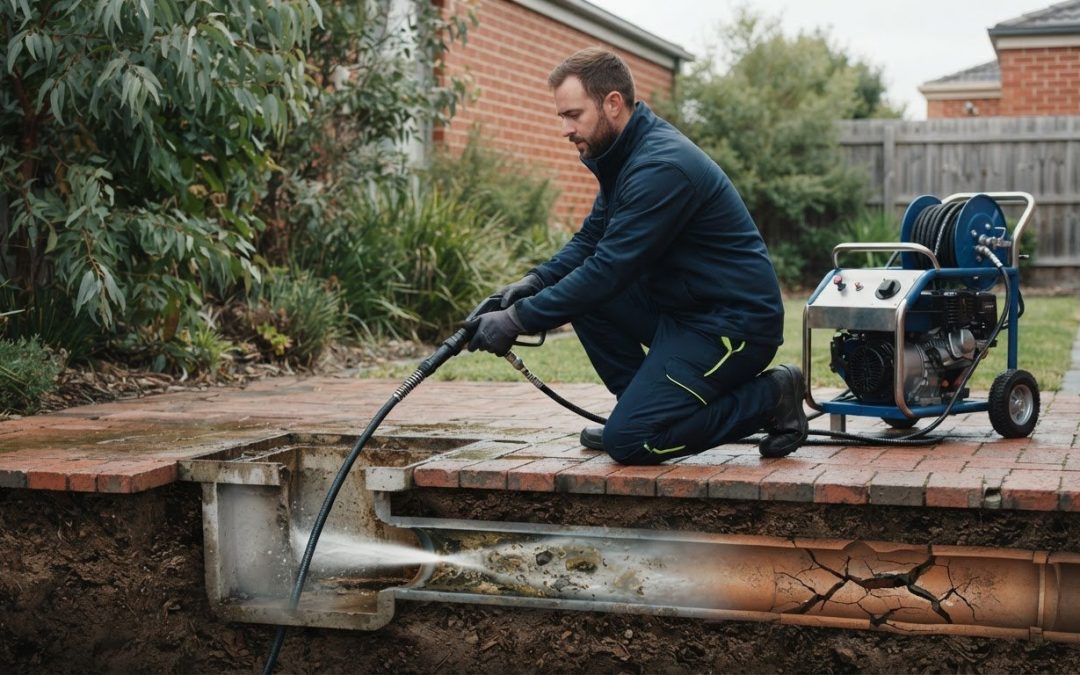
The most powerful drain-clearing method isn’t always the right first step. If you’re weighing up hydro jetting for a blocked drain, the key question is whether the blockage and your pipes suit high-pressure water.
Recurring clogs in a sink, shower or toilet can disrupt normal use, and it’s reasonable to worry about pressure damaging older or weakened pipes. Hydro jetting can clear stubborn buildup, but it won’t repair a cracked, collapsed or badly damaged drain. A plumber may need to inspect the line before choosing how to clear it.
This guide explains how hydro jetting works, when it may help and what it can’t fix. You’ll also compare it with drain snaking, which can open a path through a blockage without cleaning the pipe walls as thoroughly. The right option depends on the cause of the clog and the condition of the drain, not just how stubborn it seems.
If a blockage keeps returning, arrange a plumber’s assessment before deciding on a clearing method. Melbourne readers can contact Denservices about blocked-drain help, without assuming hydro jetting is available.
Key Takeaways
- Hydro jetting uses controlled, high-pressure water, but a plumber should match the clearing method to the blockage and pipe condition.
- Before choosing hydro jetting for a hydro jetting blocked drain, find out whether the drain needs inspection to check for damage.
- Snaking may break through or retrieve an obstruction, while hydro jetting cleans more of the pipe wall. Each method has limits.
- If a blockage returns, stop adding water, note which fixtures are affected and share those details with a plumber.
- Melbourne readers can contact Denservices about blocked-drain help and describe the symptoms to discuss the next step.
Hydro jetting for a blocked drain: what it does and when it is considered
Hydro jetting cleans the inside of a drain by sending controlled, high-pressure water through it to loosen and flush away debris. If you’re searching for a hydro jetting blocked drain solution, the method may suit some stubborn obstructions, but it isn’t right for every pipe. Wiktionary records the term hydrojetting; in plumbing, the practical point is how the water is used to clear buildup from within a drain.
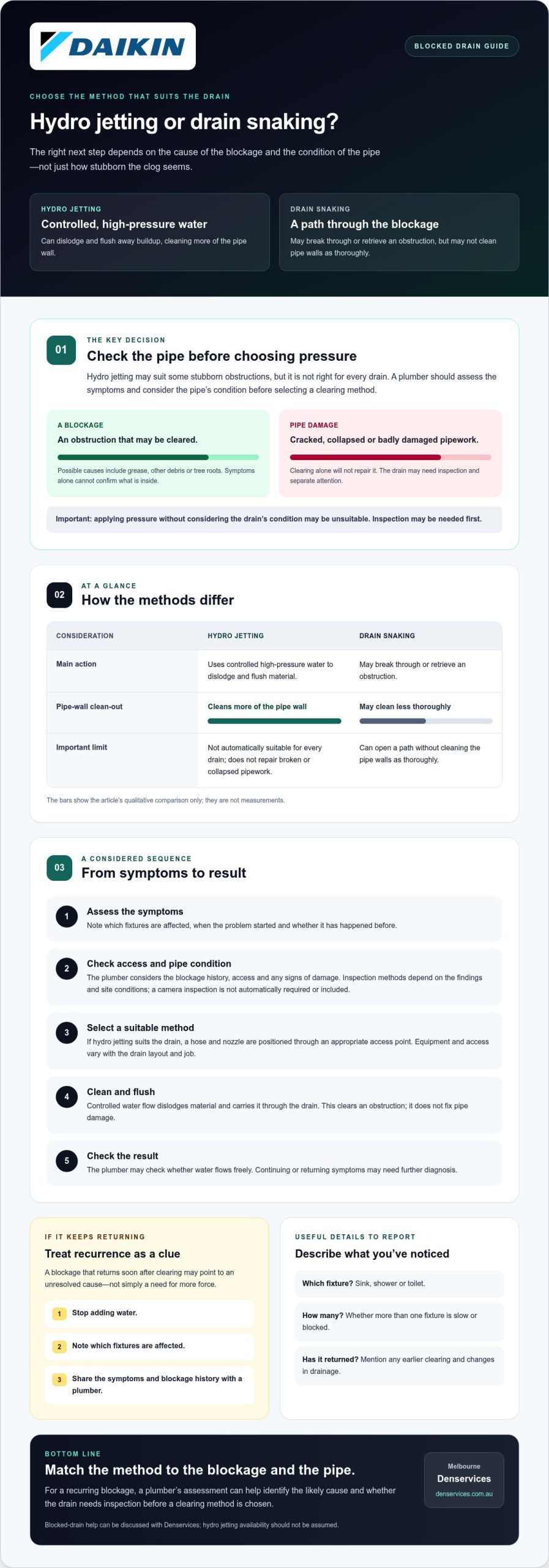
A plumber should choose the clearing method after assessing the symptoms and considering the pipe’s condition. A blockage is an obstruction that may be cleared. A cracked, collapsed or otherwise damaged pipe is a separate problem that clearing alone won’t repair. Applying pressure without first considering the drain’s condition could be unsuitable, so inspection may be needed before a method is selected.
Pay attention if the same drain blocks again soon after it has been cleared. That can point to an unresolved cause, rather than a need for more force. The obstruction might be grease, other debris or tree roots, but symptoms alone can’t confirm what’s inside. Its location and the pipe’s condition help determine what to do next.
What happens during hydro jetting?
A plumber feeds a hose and nozzle into the drain through a suitable access point. The nozzle directs water to dislodge material and flush it through the line. The access point and equipment depend on the drain layout and the job, so the process can vary. Hydro jetting isn’t automatically suitable for every drain; the pipe should be assessed before this method is chosen.
Which blocked drains may need more than a basic clearing?
A stubborn blockage or one that keeps returning is a reason to investigate further. Grease, debris and tree roots are possible causes, but the plumber needs to identify the likely obstruction and where it sits before recommending a method. A clearable clog may respond to drain cleaning; damaged pipework may need separate attention. Choosing the approach based on symptoms and pipe condition helps avoid treating a recurring problem as a simple clog.
How hydro jetting clears a blocked drain, from assessment to clean-out
A hydro jetting job should follow a clear sequence: identify the affected drain, check whether the method suits the pipe, clean the obstruction and assess the result. That matters because a hydro jetting blocked drain isn’t simply a case of applying more pressure. The blockage’s location, likely cause and condition of the pipe all affect the next step.
The plumber’s checks should guide the choice of equipment and method. IAPMO provides an international reference for professional plumbing standards, but its resources aren’t a substitute for Australian requirements or an assessment of the drain at your property.
- Assess the symptoms. Explain which fixtures are affected, when the problem started and whether the blockage has happened before. This helps narrow down which drain may be involved and whether the issue could be further along the line.
- Check access and pipe condition. The plumber considers how to reach the affected drain, the blockage history and any signs that the pipe may be damaged. Inspection methods depend on what they find and the site conditions. A camera inspection isn’t automatically required or included.
- Select the clearing method. If hydro jetting is suitable, the plumber positions the hose and nozzle through an appropriate access point. Access and equipment vary with the drain layout and the job.
- Clean and flush the drain. Controlled water flow dislodges material and carries it through the drain. This clears an obstruction; it doesn’t repair a broken or collapsed pipe. If the assessment points to pipe damage, clearing alone won’t fix the underlying problem.
- Check the result. After cleaning, the plumber may check whether water flows freely. If symptoms continue or return, further diagnosis may be needed to find what remains unresolved.
What should you report before the assessment?
Be specific. Note which sink, shower or toilet is affected, whether more than one fixture is slow or blocked, and whether the issue has returned after an earlier clearing. Share any changes you’ve noticed, such as water draining poorly. These details help the plumber assess the likely location and cause before choosing an approach.
What if the blockage returns?
A clear flow immediately after cleaning doesn’t explain every recurring blockage. If symptoms persist or come back, report that rather than assuming the drain needs stronger pressure. Ask what further checks may help identify the cause. For help with a persistent blockage, ask Denservices about a blocked drain.
Hydro jetting vs drain snaking: which method fits the blockage?
If you searched “hydro jetting blocked drain”, you may be trying to work out whether water pressure or a drain snake is the better option. Neither method suits every blockage. A plumber should assess the drain first, then choose based on the obstruction, access and pipe condition.
A drain snake is a flexible tool that reaches into a pipe to break through or retrieve an obstruction. Hydro jetting directs water through the drain to loosen material and flush it away. The US Occupational Safety and Health Administration describes industrial cleaning methods like hydro jetting. That reference explains the broader method, but it doesn’t determine whether jetting is suitable for a particular household drain.
| Method | How it clears | May suit | Key limitation |
|---|---|---|---|
| Drain snaking | Breaks through or retrieves an obstruction with a flexible tool. | Some accessible, localised blockages. | May open a path without cleaning the full pipe wall, so buildup can remain. |
| Hydro jetting | Uses controlled water flow to loosen and flush material from the drain. | Some stubborn blockages or buildup, if the pipe and access are suitable. | Not automatically right for damaged or fragile pipes. It clears material, not broken pipework. |
When might snaking be the practical first option?
If the plumber identifies an accessible, localised obstruction, a snake may be a practical way to reach and dislodge it. The tool may break through a clog or retrieve material, depending on what’s causing the blockage. It can restore flow, but it may not remove buildup along the pipe wall. If the same drain blocks again, the cause may need further investigation.
When might hydro jetting be considered instead?
Jetting may be considered when stubborn material or buildup needs to be loosened and flushed from a suitable drain. But high pressure isn’t automatically safer or more effective. If a pipe is damaged or fragile, jetting may be unsuitable. The plumber should consider the pipe condition and available access before recommending it.
Choose after assessment. A snake can target an obstruction; jetting can clean and flush more of the drain. Neither method repairs a cracked or collapsed pipe, and neither guarantees that the cause of recurring symptoms has been resolved. Ask the plumber what they found, why they recommend that method and whether further checks are needed.
What to do when a blocked drain keeps returning in Melbourne
A drain that blocks again needs more than another guess at the cause. Stop adding water to affected fixtures, note what’s happening and contact a plumber if symptoms persist. This helps limit further overflow and gives the plumber useful information to assess the problem at your property.
- Stop using affected fixtures. Don’t keep running a sink, shower or toilet if water is draining poorly or backing up.
- Check which fixtures are affected. Note whether it’s one drain or several, and whether the problem is upstairs, downstairs or in another part of the property.
- Record what you’ve noticed. Gurgling, slow drainage, unpleasant odours or a blockage returning after clearing can help describe the issue.
- Arrange an assessment. If wastewater backs up, multiple fixtures are affected or the blockage quickly returns, stop DIY clearing attempts and contact a plumber.
What information should you give the plumber?
Say when the problem first appeared and which fixtures are affected. Mention any gurgling, slow drainage or odours, and explain if the blockage has returned after previous clearing. Share what you’ve already tried, including any products used, and note access issues such as a locked gate or a hard-to-reach drain. These details help the plumber understand the history before assessing the cause.
When should you stop DIY clearing attempts?
Stop if wastewater backs up, several fixtures are affected or the blockage returns soon after clearing. Don’t keep applying chemical treatments, mix drain chemicals or use a product contrary to its directions. Avoid forcing tools into an unfamiliar drain, as you may not know where the obstruction is or what condition the pipe is in. A plumber’s assessment can help establish whether the drain needs clearing or whether there may be damage requiring separate repair.
For Melbourne property owners, recurring symptoms are a reason to request an assessment rather than assume hydro jetting is the answer. The right method depends on the cause and condition of the drain. Get help with a blocked drain and share which fixtures are affected, what you’ve noticed and whether the issue has happened before.
Need a blocked drain cleared? Arrange the right next step with Denservices
A blocked drain needs a clearing method that suits both the obstruction and the condition of the pipe. Hydro jetting may be an option for some drains, but it isn’t suitable for every pipe and shouldn’t be assumed to be the answer. A plumber can assess the job and confirm an appropriate next step.
Denservices provides plumbing and blocked-drain services. When you request help, share what you’ve noticed and where the property is. That gives the team useful context, but the suitable method can only be confirmed after the plumber assesses the drain. Don’t assume hydro jetting is available or that a particular result can be promised.
What to expect when requesting blocked-drain help
Keep the details simple and specific. Tell the team:
- Which fixtures are affected, such as a kitchen sink, shower or toilet.
- Whether one fixture or several are having trouble draining.
- When the issue began and whether the blockage has happened before.
- What you’ve already tried and whether the symptoms improved or returned.
These details help explain the problem. The plumber can then assess the job and advise whether the drain needs clearing or further investigation. The method may differ depending on what’s causing the blockage and the pipe’s condition.
If the situation is urgent, Denservices accepts emergency call-out requests through its national phone line, including 24/7. Requesting an emergency call-out doesn’t confirm a particular response time or that every location can be attended, so provide your suburb when you make contact and ask about availability for your property.
How to take the next step in Melbourne
Melbourne readers can request help with a blocked drain and confirm whether service is available in their suburb. If the blockage keeps returning, say so. Repeated symptoms are important context for the plumber’s assessment. You don’t need to choose between a snake and hydro jetting yourself; let the condition of the drain and the likely obstruction guide that decision.
Describe the affected fixtures, your suburb and whether the problem has returned. Contact Denservices about a blocked drain.
Choose the right next step for your blocked drain
A search for “hydro jetting blocked drain” is often really a question about which clearing method suits the problem. Hydro jetting can flush buildup from suitable drains, while snaking may break through or retrieve an obstruction. Neither method repairs damaged pipework, and neither is right for every drain. The plumber should assess the blockage and pipe condition before recommending an approach.
If symptoms keep returning, share which fixtures are affected and what clearing attempts you’ve already made. Recurring clogs can point to an unresolved cause, so an assessment is more useful than simply applying stronger pressure.
Denservices provides blocked-drain clearing and plumbing services, with operations primarily in Melbourne. You can request an emergency call-out through its national phone line. The method available for your job can be discussed after the plumber understands the symptoms and assesses the drain.
Ready to arrange help? Contact Denservices about a blocked drain and provide your suburb and the details of the problem. With the right information, you can take a practical next step towards getting the drain flowing again.
Frequently Asked Questions
What is hydro jetting for a blocked drain?
Hydro jetting uses controlled, high-pressure water to loosen and flush material from inside a drain. A plumber feeds a hose and nozzle through a suitable access point, with the setup depending on the drain and the job. It may help clear some stubborn buildup, but it won’t fix a cracked or collapsed pipe. For a hydro jetting blocked drain solution, the plumber should first assess the likely obstruction and pipe condition.
Is hydro jetting safe for old pipes?
Not always. A pipe’s age alone doesn’t show whether it can handle high-pressure cleaning. Its material, condition and any signs of damage matter too. A plumber should assess the drain before deciding whether hydro jetting is suitable. If the pipe is fragile, cracked or deteriorated, pressure cleaning may be inappropriate. Ask what checks are recommended and which alternative clearing method may better suit the pipe.
Can hydro jetting remove tree roots from a drain?
Hydro jetting may help clear root material from a drain if the pipe and access are suitable. However, roots can indicate an opening or defect in the pipe, and clearing them doesn’t repair that damage. The roots may return if the underlying issue remains. Ask the plumber to assess the drain and explain whether clearing is enough or whether the pipe needs separate attention.
How does hydro jetting compare with drain snaking?
A drain snake reaches an obstruction to break through it or retrieve material. It may restore flow without cleaning the full pipe wall, so some buildup can remain. Hydro jetting uses water to loosen and flush material from inside a suitable drain. Neither method fits every blockage, and neither repairs damaged pipework. The plumber should choose after considering the obstruction, drain access and pipe condition.
Can I use hydro jetting on a blocked drain myself?
It’s best not to attempt high-pressure drain jetting yourself. The method needs suitable equipment and careful control, and you may not know the pipe’s condition or where the blockage sits. Applying pressure to an unsuitable or damaged drain could worsen the problem. Stop adding water if it backs up, and contact a plumber to assess the blockage and recommend a suitable clearing method.
What should I do if my blocked drain keeps coming back?
Stop using affected fixtures, note whether one or several drains are involved, and contact a plumber if symptoms persist or return. Report when the problem started, any gurgling or odours, and what clearing attempts you’ve made. These details can help guide an assessment. In Melbourne, Denservices provides blocked-drain and plumbing services. You can request an emergency call-out through its national phone line.
Does hydro jetting fix a broken or collapsed drain pipe?
No. Hydro jetting clears material from inside a drain; it doesn’t repair a broken, cracked or collapsed pipe. If water flow remains poor after clearing, or the blockage keeps returning, the cause may need further diagnosis. Ask the plumber whether the symptoms suggest pipe damage and what inspection or repair may be needed. Clearing the obstruction and fixing damaged pipework are separate tasks.